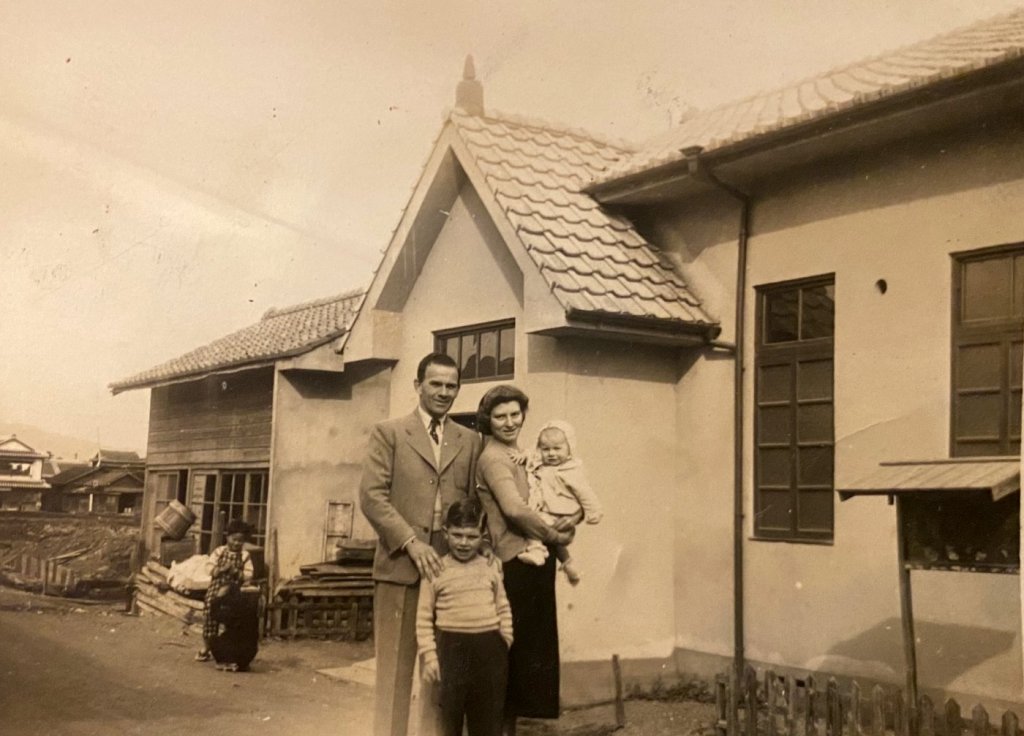
This post continues the Beppu years – 1952 and 1953
Milton:
Post-war Japan was crushing the life out of June in those days. The lack of suitable food for her gallbladder condition and the pouring rain and cold robbed her of the vitality she had in Australia. She knew that before she wasted away too thin again, she would have to deal with her gallstones. She decided on an operation and entered the university hospital nearby. It was a long grueling spinal anesthetic operation. After it was over, the doctor showed me the mass of small stones. She overcame the trials of treatment in a postwar dilapidated hospital and grew strong.
June:
Although I had been healed of tuberculosis, I still was not healed of gallstones that developed when I was pregnant with Stanley. So, I had surgery to remove my gall bladder in Beppu. Once my gall bladder was out, I was able to eat normally and conceived our second child.
Milton:
Until then, because of her weakened body, doctors had predicted that she would not have any more children. Some weeks after the operation, she conceived and started along the road to the birth of, in some ways, our miracle baby.
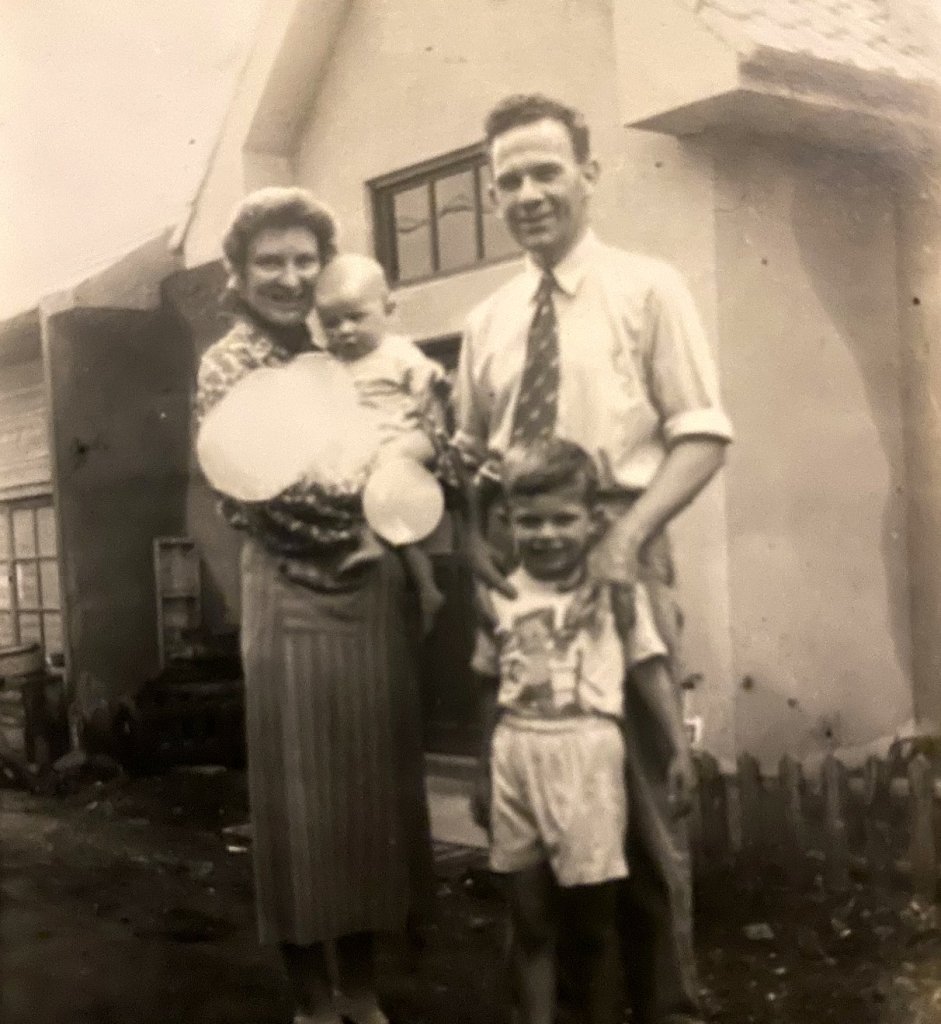
Margaret was born in February 1953. Earlier in the year, June had visited the little Army clinic for some medicine. The doctor noticed her and mentioned to the nurse that if he were on duty and if the clinic was not filled with paratroopers, he would gladly deliver the baby for us.
On Saturday night, February 21st, June played the organ for our special Gospel service. At somewhere around midnight, June woke me to say she was beginning labor. The Army nurse had ordered us to contact her at any time at all as soon as June felt the labor movements. I eventually got to my shaky feet and staggered out to a public phone. The nurse said to get June to the clinic immediately, while she rounded up the doctor. He was out celebrating his birthday in some heavy drinking place in the city and couldn’t be found. The nurse located a different doctor and asked him to help. He agreed and rushed to the clinic. We were pleased to learn this emergency doctor was a fine Lutheran Christian. And then before daybreak, Marge was ushered into the world.
The Army ambulance whisked June and Marge back to our place before the neighborhood was awake. Sunday morning, February 22nd 1953, there was a pretty baby in our house, just as if she had been dropped right out of heaven. The celebrating physician woke up with a sore head and when he heard of his broken promise, he hurt worse. He arrived at our doorstep on Monday laden with a mountain of baby food and vitamins and baby accessories. It was, he said, his penance. Then within a week, a package of baby clothes arrived, sender unknown. We hadn’t asked for a penny; it hadn’t cost us anything and Marge was the best fed and best-dressed baby in Japan.

June:
It was an easy birth because I had learned exercise when pregnant from a book called, “Childbirth without Fear” by Dr. Grantly Dick Read. Almost as soon as she was born, her eyes roamed around the room. Who said that newborn babies cannot see? O the joy!
Milton:
Right amid all this, the ax fell from our denomination. Our leaders did not appreciate some of our theological leanings but to them, the most spine-chilling habit was that we let ladies pray out loud. They decided to cut out our names from the official prayer bulletin. This meant we became ‘unpersons’. All this was done without bitterness. We were all like puppets caught in human frailty and were being swept, almost against our wills, down two different rivers. The colleagues with whom I had started the exciting youth ministry in Sydney that in many ways sparked new life into the denomination; the people who had stood on cold nights in the streets; and my gang in the slums were all going away. We had hiked together and suffered together and laughed together but now we had to say “Goodbye”.
The elders saw our possible difficulty, like marooned sailors, and offered to pay much of our return fare to Australia if we wanted to quit. Some even panicked and thought that we would starve. On the other hand, we could see the stubborn independence of our own natures and wondered why we didn’t conform like other better people. We wondered, maybe they were better people – was there some other deep motive in our minds? We didn’t know.
June:
We realized that we were not following the strict unwritten rules of the Plymouth Brethren in that we allowed the women to take part in prayer in our meetings. There were other differences in our interpretation of Scriptures and when we told the elders, the Brethren could no longer recommend us as missionaries. We agreed to disagree, and they sent out a notice through their newsletter, Missionary Tidings, that they no longer recommended us. There was no other explanation so that no one knew whether it was a moral issue or doctrinal. There was a suggestion from one of them that they would assist us with our fare back to Australia.
However, we considered that God had provided for us and we had learned the Japanese language to some workable degree. It could not be God’s will for us to return to Australia when we were just beginning. So, we stayed believing the words of Jesus in Matthew: “Seek ye first the Kingdom of God and His righteousness. And all these things shall be added unto you. “
Milton:
One month the normal average of about 30,000 yen arrived in the bank account (Mary: less than $1000 in today’s money) and then the next month it was down to 5,000 yen and then the next month it was zero. We decided to stay in Japan where the Lord had so wonderfully brought us. Our denomination support had all gone, and we had no others. We knew two people outside of our own group in Australia and had no church connections at all in Japan. From that moment, the Lord began to initiate a series of staggering events that would keep us wide-eyed with thrilled amazement for the next two to three years.
June:
God began to use paratroopers from the Army base to help us financially. They never knew that we were not financially supported by our denomination as were other missionaries. Each paratrooper thought he was giving us something extra. And this did not happen until we left the Brethren.

Milton:
The Regiment’s Chaplain, Bob Rayburn, arrived shortly after my last sermon at the base, and I went back to my books and Japanese services. One day Bob brought a group of Christian G.I.s to our house. They had a request. They wanted to counteract the less than Christian activities of some of the off-duty G.I.’s in the red-light district of Beppu with a witness for Jesus. They wanted to know if June and I would work with them? I hesitated because we still needed to spend much time each day on the language.
“We will do all the work,” Bob promised. “We’ll give out tracts, light fires, do anything you have to jump the language barrier for us,” he pleaded. So, we agreed and rented an old disused showground with a wooden building that had a dirt floor. We built a fire in an old oil drum to keep us from freezing in the winter and when it rained, we arranged the benches away from the puddles of water. We pushed a hand cart with an amplifier mounted on it and announced the meetings all over town.
June:
The Chaplain offered to hire a hall for Gospel meetings and Milton advertised it. They would share in the preaching and I was given the job of interpreting into Japanese. Milton put a loudspeaker on a bicycle and advertised it walking around the downtown area of Beppu.
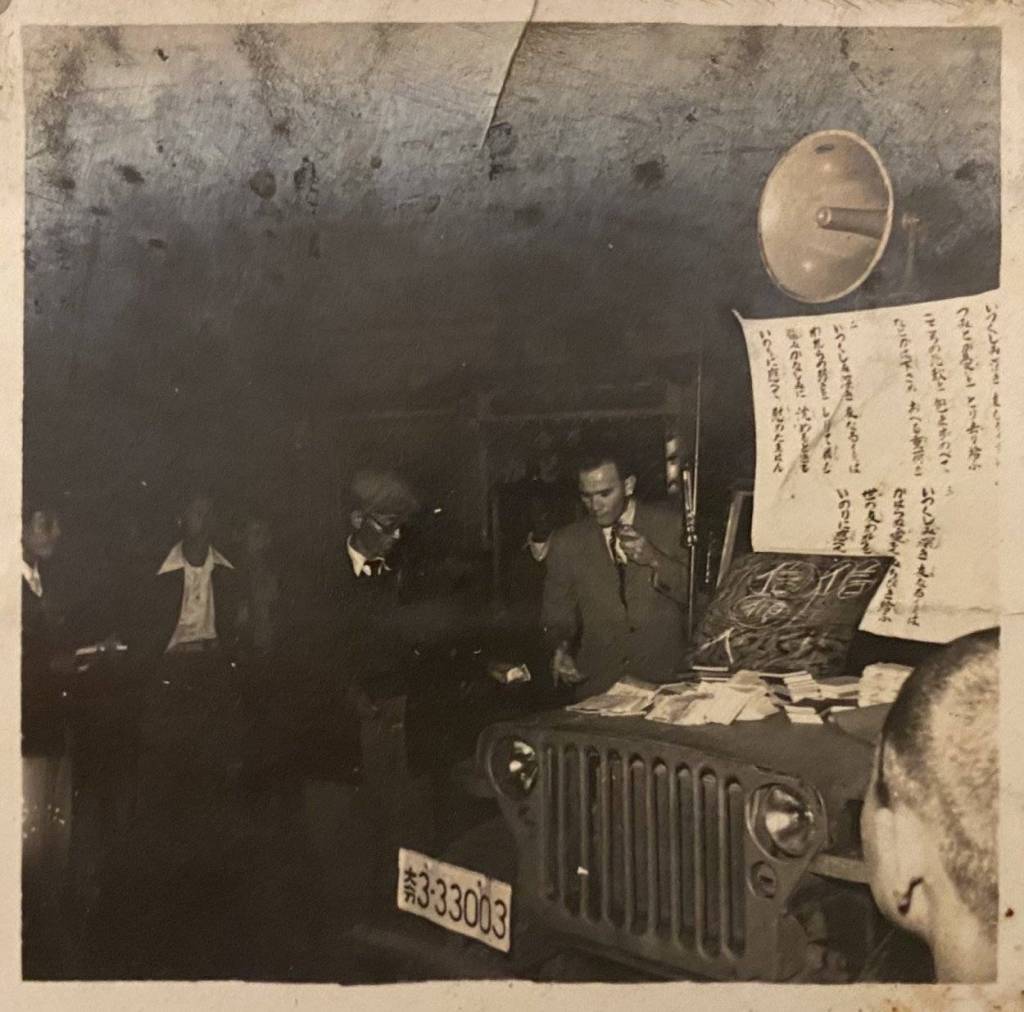
The floor of the hall where we had these meetings was dirt and when it rained the people would be seated on chairs but with their feet in the water.
There was a strong interest in the Christian religion in those days because many people had been disillusioned by their military using the Shinto religion to send out suicide bombers to fight for Japan. As well as having the Saturday night meetings with the paratroopers helping if it was not raining, we held street meetings with Milton preaching.
Milton:
The first man to find God in those meetings came out of a place of great personal darkness. Mr. Ikoma owned a small souvenir shop in the glittering shopping arcade of touristy Beppu.
June:
Milton happened to walk right by his shop advertising the Christian meeting. Mr. Ikoma had been deeply religious in the Shinto religion, believing that the Emperor of Japan was a descendant of the Sun Goddess. At the end of the war, the Emperor was forced to declare over the radio that he was not a god. He considered suicide at the shock of losing his faith but thinking of his family caused him to hesitate.
Milton:
The fall from divinity of the Emperor at the end of the war, shook Mr. Ikoma so hard he was taken to a mental hospital. When he recovered, he started his successful souvenir business, but his heart was dark. He heard us talking about an unchanging, loving God and these words sparked a little hope in him.
He came into our bare floored shed and sat with quiet dignity. For a few weeks, he came in silently, listened then left without a word. One night he stayed behind.
“Is it true your God is eternal and unchanging?” he asked.
“Yes, it is.”
“Is it true that He loves me?” his eyes were asking as well.
“Yes, it is…and He will go on loving you forever.”
“I want to believe…tell me how to pray to this undefeated and unchanging God.”
We told him about the Lord Jesus and the Cross. And Mr. Ikoma knelt and talked with God. He started his prayer with “Good evening, Lord”. But he was saved, and he led his whole family to the church and to the Lord, including his elderly mother. He closed his shop on buys Sunday, without a hint of suggestion from us, so that his whole family might learn about God. Our other church members were amazed at the way his little shop prospered on the other days.

Our Japanese language was painfully limited, and our experience was very shallow, but people kept coming to the Lord.
We sold our pretty home with the fruit trees and the hot spring and went into the lowlands of the city to be near the people. We bought a tent and preached on the land alongside our new house.


But as winter came near, we knew we would need a proper building. So, we began to plan for a church building. We asked a carpenter for a quote. How we would ever find the money was anyone’s guess, but we were prepared to leave that with God.
Before our last newsletter was sent out as part of our former mission, I had reported the needs of the poor around us and suggested people send any extra used clothes to my mother’s address in Sydney. Later, my mother contacted us and wanted to know what to do with the goods; they were filling up a room. Somehow, she managed to get them all crated and shipped to us. At the same time by God’s timing, an enormous consignment of clothes came to us from the USA. I never knew who the sender was, but I think it was a contact from the Chaplain. We got the shipment into the country, just before the Japanese Customs gained post-war confidence to slap a large duty tax on such valuable things.
We packed a room to the ceiling with clothes and shoes and handbags. These were not hand-me-down rags. These were fancy shoes for parties and formal evening dresses; trousers better than anything I wore. Some friends insisted that it would be foolish to give such things to people living under bridges and caves. The delicate shoes would be useless in a week and the gentle dresses destroyed in the dirt.
“Give what you think is suitable and sell the rest,” a friend advised, “then use the money to help people.”
That made sense and the idea of a sale took hold. We rented the old showgrounds and wooden building for two days. I churned up some ice cream on a hand mixer and we organized a country fair of our own. We used the amplifier to broadcast our two-day “wonder” sale. We spread clothes out on benches and asked folks to go in one door and select what they wanted and go out the other door and pay. They streamed through the building all day. By the end of the second day, we were sold out and had enough money to build our auditorium.
June:
We were able to build a church building in Beppu and sold our house in the hills and moved next to the church. We had only a small group of Japanese, less than 30, but the two sisters, Teriko and Yoriko Tsukamoto (mentioned in an earlier blog post) helped us greatly. We started a Pre-school kindergarten in the church building. Teriko and Yoriko taught in the Kindergarten. Our son Stanley was one of the pupils.

Milton:
We started a day school kindergarten right away and employed the two loyal sisters, Teriko and Yoriko as teachers. These two girls were the first people June had led to the Lord in Japan. A young man who had been thrown out of his home because of his faith in Jesus came to me; as training preparation for Bible school.

We lived happily, free from concern over finances. If we needed anything we bought it. Where it came from, often we didn’t know. Sometimes there was nothing in the Bank. One time I was going to need about 40,000 yen by the end of the month. And the Lord did it. He provided the yen in small amounts from about a dozen sources.
We hadn’t heard from Iris Hyslop since her Chaplain husband had died in the Korean war. She wrote to tell us that for several months she had become burdened for us and had tried to pray but still felt a burden. She had never given money outside of her own denomination, but she was so concerned for us that she sent $50. When she did, she felt the burden lifted; God had got through.
June:
God used the American servicemen individually, without them knowing what other soldiers were doing, to supply our financial needs. It was amazing. We were even given an electric blanket which I had never seen or heard of before.
Milton:
One day a young G.I. called on us. He had been introduced to Jesus by Sergeant Joe Kawakami in the Camp gymnasium where they worked. As he was walking out of the building the day before, he suddenly felt aware of his selfishness. He was on his way to buy a radio. With music all over the camp, he realized he didn’t need a radio. He asked the Sergeant what he could do for some missionary with his extra money. Joe told the G.I. about a dual control electric blanket he had just bought for his wife who had just given birth to a son and she was extremely glad for it in the frosty Beppu mornings. The G.I. walked over to the PX and then the next day headed to our home. He placed the parcel on the floor and explained he couldn’t come in as he was in a hurry. June was upstairs with baby Margaret. I thanked him and he left. We had never even heard of electric blankets, let alone lain under the warm security of one.
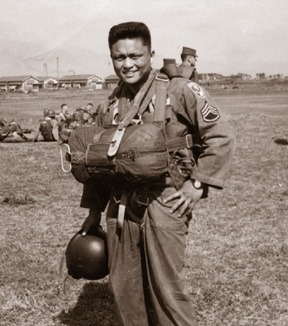
Mary: After I read Dad’s paragraph above I did an Internet search for Sergeant Joe Kawakami because it struck me that Dad clearly knew this guy well. And I found him! Unfortunately he passed away some years ago but this write up on the Seattle Nissei Veteran’s Committee gives more background on Joe. Give it a read if you have time it is quite inspiring. This picture is from that site (and they kindly gave me permission to use)
We were so accustomed to the Lord supplying our needs through the American Army Christian group (who did not know that we were not on a salary from some mission) that we were shocked one morning to awaken to find that our American paratrooper friends had gone to Korea. We realized we had been too dependent mentally on them and not enough on the Lord. We now had the expense of paying the salaries of the teachers in the Kindergarten and expenses of new chairs for the Kindergarten etc.
Milton:
Maybe we were getting to lean too hard on casual G.I. connections but one Sunday the camp was buzzing with life and then on Monday morning it was as silent as a grave. The Airborne, on 24-hour notice, had flown to Korea. If we had built up too much human reliance, it was now gone but God kept supplying us our needs.
June:
Strangely, some of our friends who had left as Paratroopers to Korea somehow managed to send us gifts of money. One day I figured out we would need a certain sum of money by the end of the month and prayed for it.
Milton
One Saturday afternoon, I noticed a young Air Force officer and his wife at the railway station. They looked lost and I asked if they needed help. They had just gotten married that day in Fukuoka (a city to the northwest of Beppu) and had arrived in Beppu for their honeymoon. They were looking for the hotel they had booked into.
The following Monday, June and I went into the city. On the busiest street in town, among the streaming thousands of people, we walked right into the Air Force couple. I introduced them to June, and they told us their names. We exchanged niceties and the officer asked what we did. Then we parted ways. The next week a check came for $100. I wrote and sent a thank you note but we never heard from them again.
June:
This was almost the exact money we had prayed for to meet our needs till the end of the month. I said to Milton, “Although we now have enough money to pay for things it is just short of what I had prayed for.” Later, I happened to clean out a drawer and to my great excitement a small amount of money, that I had forgotten about, was in the drawer. And that brought the total to what we had asked for. It was an unforgettable moment of realizing that God is our Heavenly Father.
When you say God is with you,
you should expect a miracle.
And they mostly happen when there
is nowhere to look but up.
Milton Wayne
 From the Land Down Under to the Rising Sun