In their later years, June and Milton both expressed an interest in digging a little deeper into their heritage and the stories that had been passed on to them. Back in 2013, I signed up for an account with Ancestry.com and was able to confirm for them some of the things they already knew as well as a few new details. Milton’s heritage was Scottish and June’s mostly English and I was able to give them some more specific locations. Since then, the Ancestry.com database has improved so much as well as more people adding to the DNA data that now far more information is available. I wish they were here still to see the details but at least if any of you are interested, I am happy to pass it along. When it comes to the Whan/Hibberd side, Darelyn is the expert researcher, so I owe her credit for much of the information on my ancestry tree.
Here is my ancestry DNA story. Unless you are my sibling, yours will not be identical, but this is the portion that you can trace to the Wayne side of the family. When you read in future paragraphs, about ancestors emigrating from the Great Britain, this gives you a little visual.
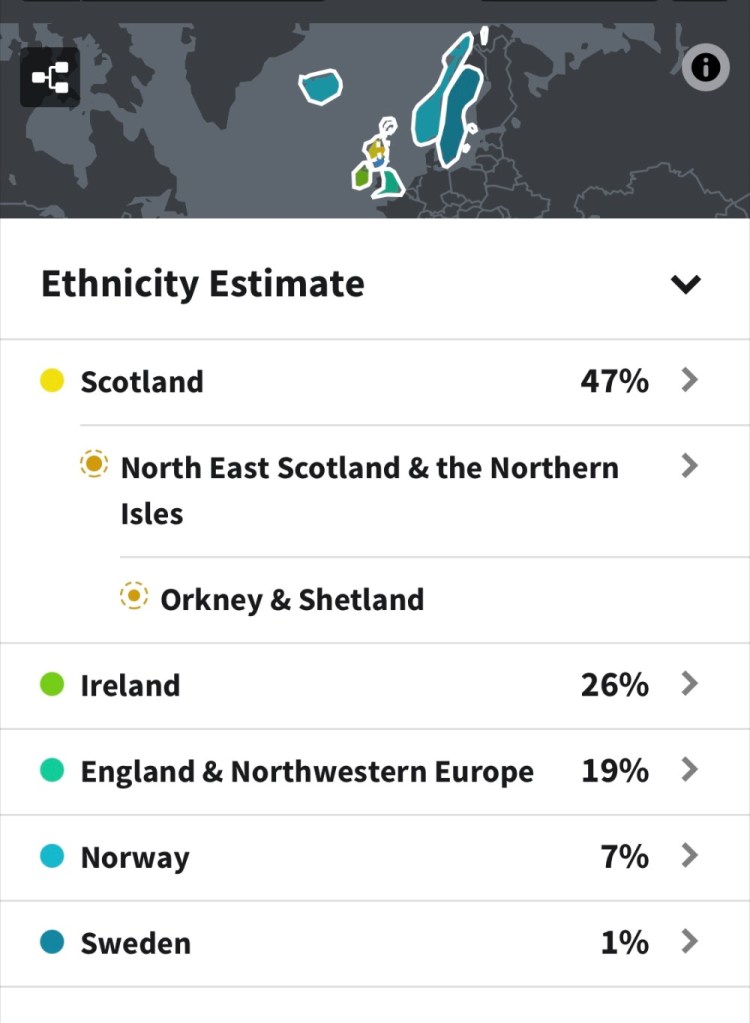
Also, sorry to cover what is common knowledge to most here’s some key family names:
June Wayne’s maiden name is June Mary Furner. Future posts will cover her ancestry, but I will mention now that her siblings were, Geoff and Elizabeth. Neither had children so June had no nieces or nephews.
Milton was born as Milton Stanley Whan. Mom and Dad changed the Whan to Wayne, while they were missionaries in Japan in the late 1950’s…more on that at another time. I’d also like to do a separate post explaining who we all are – first cousins, second cousins and first cousins once removed. For now, Milton had three siblings: older brother Walter, and twin younger sisters: Loloma and Rewa.
The paragraphs to follow are what Milton wrote about his parents and paternal grandparents but first it may be helpful to have a visual of that family tree branch. Here is a screen shot from my ancestry account.
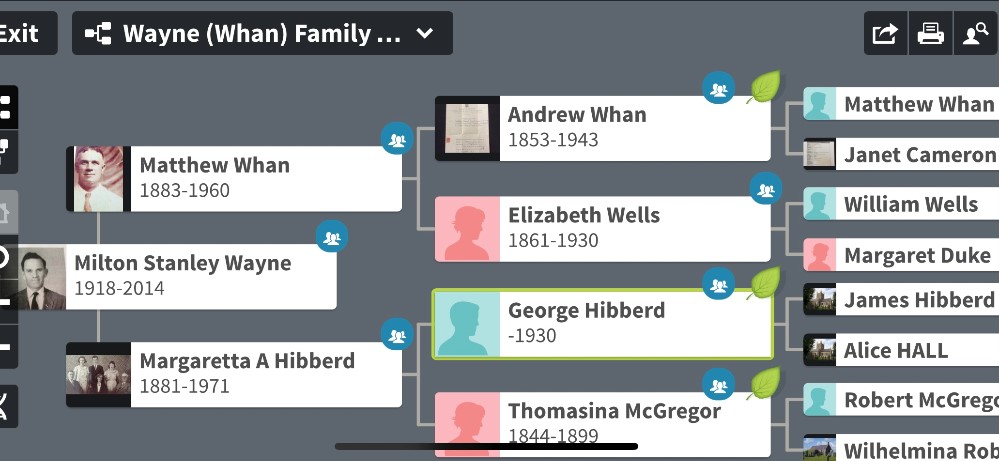
Milton’s father is Matthew (1883 – 1960) and his mother, Margaretta A. Hibberd (1881 – 1971). He refers to his granddad and that is Andrew Whan (1853 – 1943). Andrew is the one who came to Australia from Scotland (as well as his father). He also mentions his paternal grandmother, Elizabeth Wells Whan. She also came from Scotland, before she even met Andrew. Milton’s story mentions his father’s brother Andy so don’t confuse that with his grandfather, Andrew. If you look at the tree picture, there were multiple Andrews and Matthews in this line.
Milton’s words:
Mother grew up in a little valley outside the coal mine village of Minmi over the hills from the smokey steel city of Newcastle in NSW, Australia. After she left school, she moved to the city to help a pharmacist and his wife. While there, she taught herself the organ and was nominated organist for the Methodist church. Somewhere along the way she met my Dad. To his big heart, she must have been something special to care for. But to his family, he was walking into a trap. They said that their “up and coming” Matthew was marrying a “doctor’s bill” and they did not like that at all. It turned out their worries were unfounded, and, in any case, they had little hope of discouraging Dad. He always knew what he was doing.
Dad came from the same little backwoods’ village as my mother, although he was not originally from there. He was born in the great city of Sydney. His father, my grandfather Andrew Whan, migrated to Australia from Scotland as a stone mason. Some of the bridges that granddad built still span little creeks around New South Wales. His wife, Elizabeth was a five foot money maker: a “business wiz”, my auntie said. Grandma travelled out to the Australian colony on a windjammer, alone and only 18 years old.
They had six children and were financially well established and socially moving up in the world. Then the banks crashed under the crunch of a depression around the turn of the century. Granddad and Grandma lost everything. The family packed up and moved north to the coal fields. Granddad started building stone walls for the mining company in Minmi. Within a few years my polio cripple Auntie Beth used to hobble on her crutches onto a train for Newcastle to collect rent from houses Grandma had invested in. They were on their way again.
By this time Dad, their eldest son, had left school and was apprenticed as a carpenter. He travelled to the Newcastle Technical College at night by horse and buggy. Sometimes coming home late he fell asleep. The horse always delivered him safely to the front door of his home. Better service than a supercharged Mercedes. Dad was brave and ambitious, but he wasn’t the aggressive type and his faith was the same: quiet but doggedly strong. He attended church wherever he went and his was the nearest to a faultless character I have ever known.
When Dad’s training at the technical college finished, he adventured out into the back country with his young brother Andy, looking for work and experience. One day he decided to explore the next town alone. As he walked out the door that day, he called back to Andy, “I’ll be back for supper.” Uncle Andy didn’t see him for ten years. Instead, Andy received a telegram asking him to send Matthew’s tools to Sydney. My father’s wanderings became a family joke. Especially compared to Andy who took a job driving a steam engine that puffed its way back and forth each day along a 40 km track from the coal mines to the steel works. He stayed at it for 36 years.
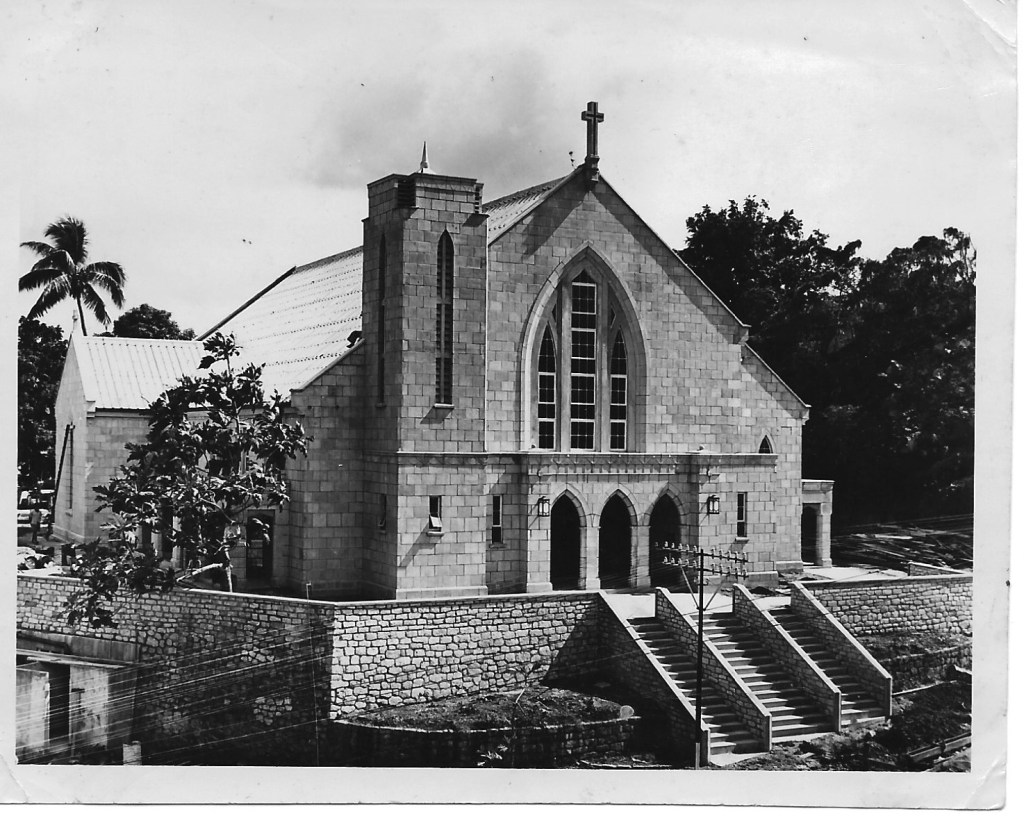
What happened to Matthew on that day that when he left for ten years, he happened to pick up a Methodist Church magazine and saw an article appealing for any young carpenter to work in the Fiji Islands. Dad jumped on the first train to the church headquarters to apply for the job in Fiji. And so, he went there and built some churches in Fiji and trained a few locals in the little Mission school. During this stay in Fiji, the tropics grew on him. He knew that this little nation was to become his life. He headed back to Sydney when the contract was fulfilled. He was filled with the light of hope and purpose; chasing away any shadow of doubt of his future. Mom might have had some doubts about the wandering carpenter and her future security but those were gone when she saw this transformation. They were married.
Dad and Mom settled in Annandale, an inner suburb of Sydney. It was the town where he had been born and where his own mother and father made and lost their first pot of gold. He worked as a carpenter during the day and studied at college at night. He aimed at starting his own business in the Fiji Islands but there were some things he had to learn first. He envisioned concrete buildings to accommodate the growing nation and offices for this island nation and he lived to see his dream come true.
He eventually built the Governors palace and the national Hospital and the first three-floor concrete building ever to be built in Fiji. He had witnessed something fresh and alive in the few years he had been there. He had seen a young generation coming out of the shadow of cannibalism and violence, through the message of Jesus from martyred missionaries. He wanted to be part of the new creation. He was following his calling.


 From the Land Down Under to the Rising Sun
The story about the name changing from Whan to Wayne, as I remember being told as a child (could be way off though) was that Dad or both my parents (Milton and June) were being mistook to be Chinese or Japanese when returning to Australia on furlough and speaking about their mission work, to raise money. So Dad made the decision to make a name change. I was born a Whan but Mary was born a Wayne. So, I know in this day and age, the reason for the name change might be mistaken as “racism” or “anti-Asian bias”. “So what if you are being mistook as an Asian?” you might say. I think it may have been a big deal back in the late 50s. Australia was somewhat anti-Japanese probably due to the WWII. The stupid thing is that Wang is not a Japanese name at all.
LikeLiked by 1 person
Yes – that’s how I remember it too. I do remember in later years after researching ancestry Dad laughed that maybe switching back to McWhan would have been a better solution as somewhere in 1700’s it switched from McWhan to Whan
So name changes are in our history 🙂
LikeLike
opps, somehow, I posted the comment as Anonymous…no, I meant to post it as David Wayne
LikeLike