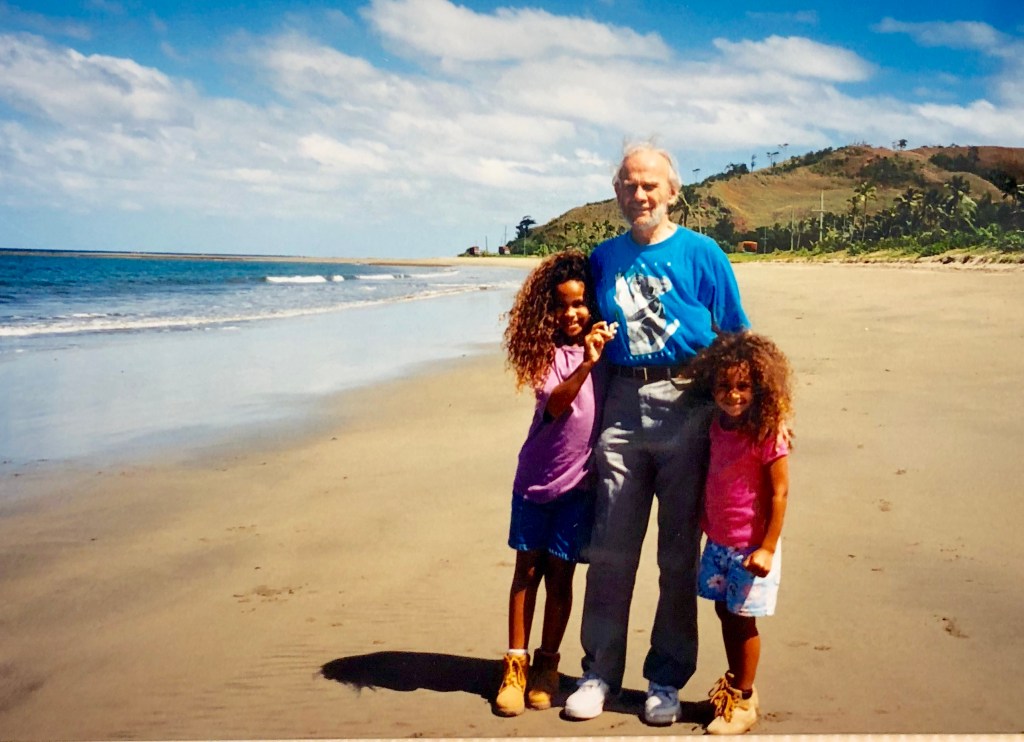
Warning! Get in your comfy chair – this is a long post. In addition to Milton’s eloquent words about Fiji we are also treated to the memories written by his sister, Loma. And admittedly I had to inject some of my own memories of visiting Fiji with Dad and Mom about 25 years ago.
Dad (Milton) told stories of growing up in Fiji to us kids in such a glorious way, that it became a mythical, magical place in my mind. I remember the tale of a young Fijian diving off a dock with a knife clenched in his jaw, to ward off a shark – or maybe it was just to catch a fish. When Dad spoke of Fiji, it was with a special blend of warmth and enthusiasm. The very opening lines of his autobiography are told from the perspective of the moment he left his beloved Fiji, to study in Australia. Leaving his childhood home was clearly a pivotal moment in his life and the emotion is felt in his writing.
Milton:
The salt on the wooden rail of the “Mariposa” felt like sand and I crumbled it in my fingers as I watched the uplifted faces down on the wharf. I was 16 years old and moving away from my island paradise. I tried hard to project myself as if I didn’t need those people down there – otherwise I think I would have cried. Places that had been my whole life were blurring in the evening sun. Around me on the deck, American tourists laughed and chatted, but I was alone; probably the only passenger to get on board at Suva, Fiji.
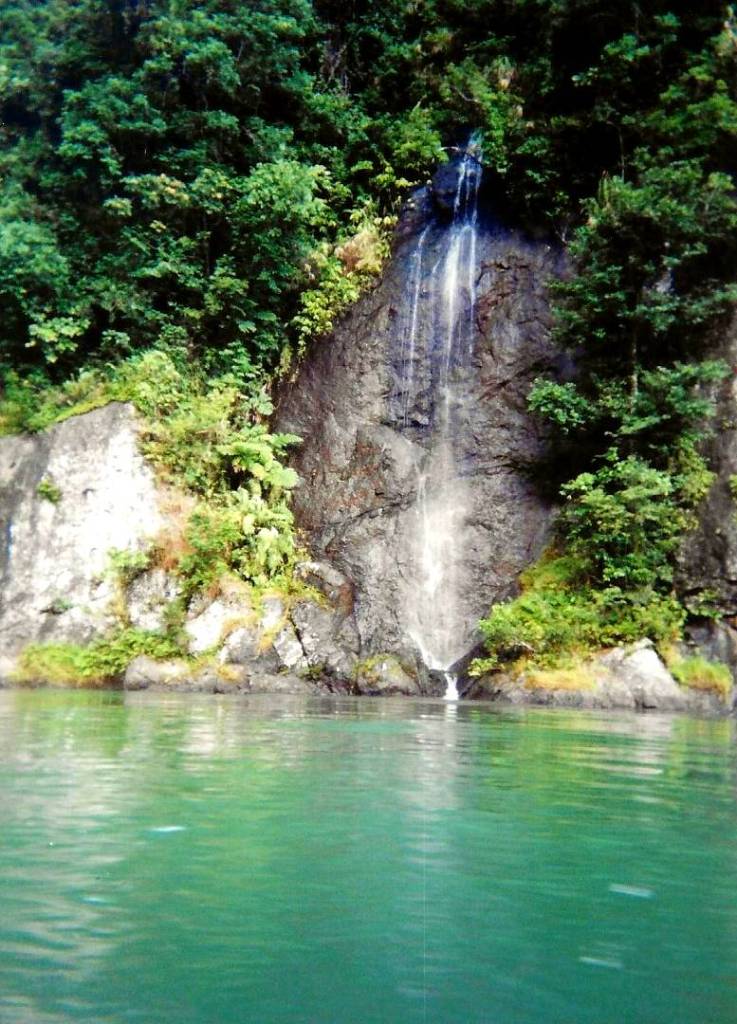
I had slipped through my childhood lightly; maybe too easily We weren’t pressured to study hard at school. At least I wasn’t. We roamed the mountains, my friends and I; we swam in crystal clear pools above the cascades or under the stinging waterfalls. We sailed to sand bank islands on the reef and lay in the warm sand searching the black diamond dotted night sky for shooting stars. Now it was all going forever…
Mary: In a previous blog post Dad explained how his father Matthew was drawn to Fiji to help build churches. Matthew & Margaretta have married and are raising their four children in Fiji and it is from that point in the timeline he continues…
Milton:
My brother (Walter) was born about the time my parents returned to Fiji. My mother was a reluctant traveler. Ships scared her and made her agonizingly sick. She had grown up among the blackberries and little streams of her hometown in New South Wales. She never lost her first love for this countryside nor did she ever fall in love with the coral reef and ocean around Fiji. When we were kids, she loved to take us to a hidden valley in the rain forest just outside of Suva. There was an outcrop of volcanic rock that looked like a city after a bomb had hit. She called it her ruined castle and we followed her as she scrambled through the rocks, imagining where each room used to be. Or she would splash with us among the rocks in the gurgling mountain streams. She was at home in the hills. She lived in Fiji for over thirty years, but she never gave it her affection. She gave that to us, strong and very low key. And for us, she suffered long sun-burned sea trips on the deck of one of Dad’s launches so we kids could adventure miles down the coast and up the mysterious forest fringed river to where Dad owned a stone quarry. We loved it; she hated it.
We used to paddle around the shores like pirates looking for treasure. I have balanced on the side of a half sunken ship and watched huge sting rays glide in and out of the cabins below. We shuddered at the thought of what would happen if we fell in. I have gazed down into the crystal-clear water that plunged from pale green to deep blue as the launch glided over a reef. You could see fish and sometimes turtles playing 40 feet down. We were in another world. Mom sat and read books. She was in another world too. We didn’t see the tear in her eyes as she floated back in memory to her sun-browned inland hometown in Australia. But she was a special kind of lady. She gave me a confidence in myself I didn’t earn. Every time I did something that amused her, she would call me the ‘hope of the house’. That went deep into my mind and carried me along when problems piled up on me later. To me she was a perfect mother.
I splashed in the rain, sailed in a boat, sat in the sun through the process of growing up. It was as natural for me as a coconut growing in a tree. We were united as a family. We picnicked together, drove into the country together in the old tin can Rugby car that Dad would not replace. It was a gentle life. While my days skipped by, Mom was crusading against ‘booze” as the president of the local women’s group, or she was studying some new subject. And Dad was building his little one-man workshop into a Construction empire.
By the time I was a junior in high school, he operated out of a great complex of buildings that included a plumbing department, joinery-furniture department, a timber yard and offices. Beyond that he operated a stone quarry, a sawmill, and a stone crushing plant. He owned a fleet of trucks and tow-barges. But he never lost his love for the little churches in the villages. He must have built scores of them. He would supervise the building of them himself.
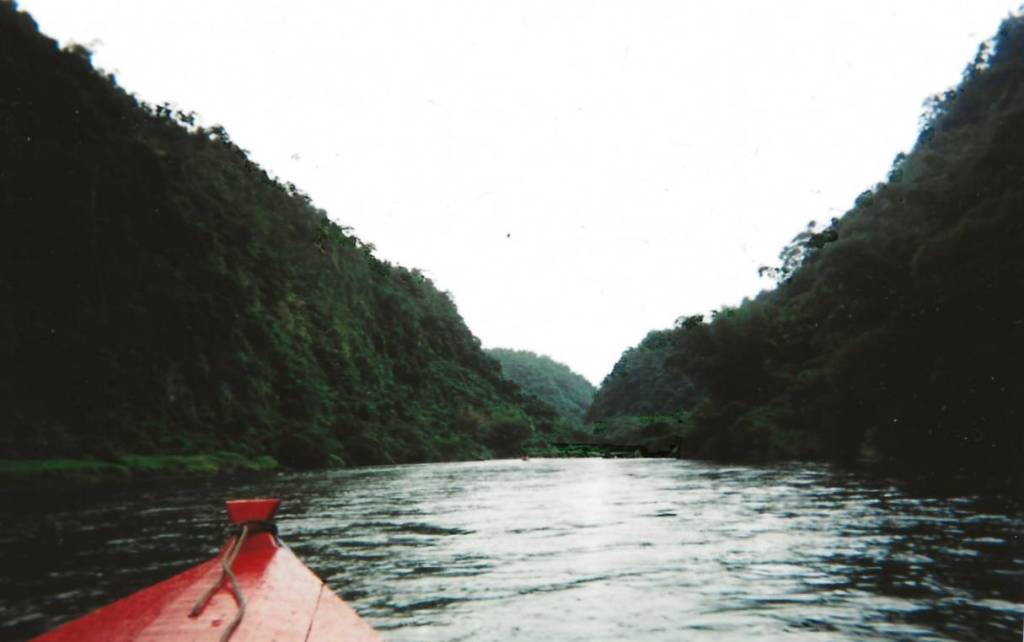
I went with him once, way up a wild river. Men stood with poles at the front and back of the narrow river punts. They guided us through seething gaps between jagged rocks and across excited rapids. One minute the boat was heading straight for destruction into a lava rock and the next it was skipping across the foam like a dragonfly into a quiet lagoon. Time after time we maneuvered around bends to focus in on the silver glitter of a waterfall plunging over the cliff into some valley. One day we counted 35 waterfalls on a journey. In the evening we would be entertained by the village chief. I would hear the flutter of wings and the pad of running feet outside. Then silence, and I knew we were going to have a village-style chicken dinner.
The next day, while Dad conferred about the church building with the village elders, I would swim in the river with the village kids. There was no segregation. My father cared for his staff like a father cared for his children. He kept bank accounts for them, worked out an insurance plan for them, taught them the trades and advised them. They respected him and loved him. Everyone admired my Dad and I do now more than then.

Mary: When Dad turned 16, his father, Matthew seemed to see that Dad needed to expand his horizons and told him : “You need to leave. Learn the electrical trade. Go to school. Then if you want to come back you can learn this business later.” As it turned out Milton didn’t return to live in Fiji but become a missionary to Japan and here is how he penned his last moments living in Fiji:
Milton: So I left my paradise and my friends. A group of us played on the deck of the ocean liner as we often did. The gong clanged to signal non passengers to disembark; my friends left and I stayed. Some kids didn’t realize I was leaving. They thought I was joking. I saw my sister and mother wave and I gave a little inhibited one back. I didn’t want to appear too childish to my buddies looking on. Dad was standing back a little, tall and solid with his hands behind his back. It was the first time I had left home for more than a few days, but I wasn’t afraid. I watched from the deck as my family and my hometown fell back. I could have touched the old lighthouse on the reef, that I had always gazed at from my bedroom window. I walked down the deck, no one noticing me – I watched the ship dip into the oncoming waves and felt a thrill. My mother’s words echoed in my mind – “You are the hope of the house”.
Mary: Dad’s departure would have been about 1934. I think Dad visited Fiji somewhere in the decades that followed just not sure of the dates. However, what I do know is that in 1996 when we (Mary, Elaine, Allison & Ernest) were headed to Australia, we decided to make three-day layover in Fiji on our way to Australia. To my delight, Dad decided to fly up from Sydney and meet us there. We rented a car and explored Suva looking for the buildings constructed by the Whan Construction Company. We drove by the Colonial War Memorial Hospital and a small Methodist church on a hill I unfortunately don’t remember the location.

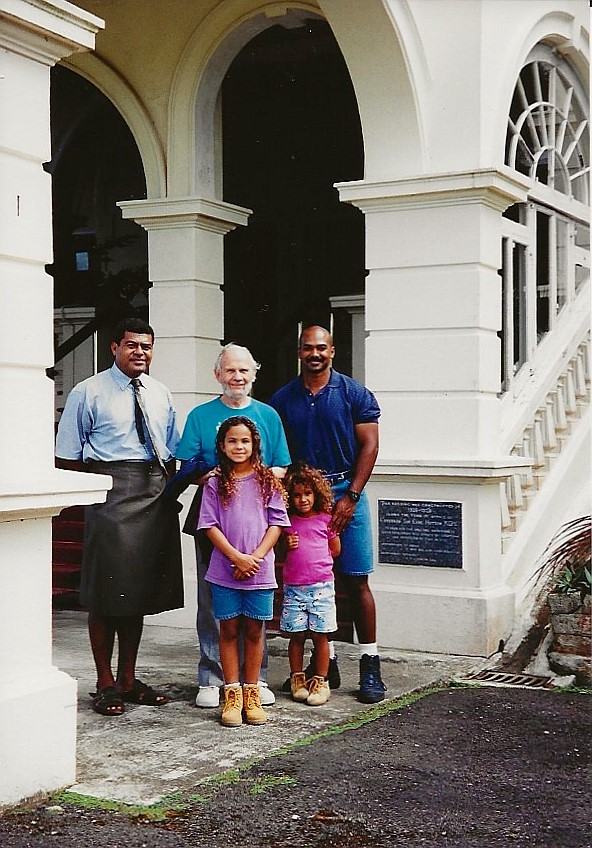
The highlight was getting to tour the grounds of the Government House – which is where the Prime Minister lives. We did not get to go in because the Prime Minister was in that day but one of the secretaries was old enough to remember Whan Construction so arranged for us to be able to walk around the grounds with a guard.
After that tour at some point, Dad directed Ernest, who was doing the driving, to head in a general direction just basing it on his childhood navigation system. We found ourselves at an interesting open food market in a suburb called Nausori and stopped to look around.

Once there, a forgotten memory seemed to spark in Dad and he started talking about a boat landing somewhere nearby. I wasn’t clear at the time what the attraction was, but we drove off and soon enough, found the landing.
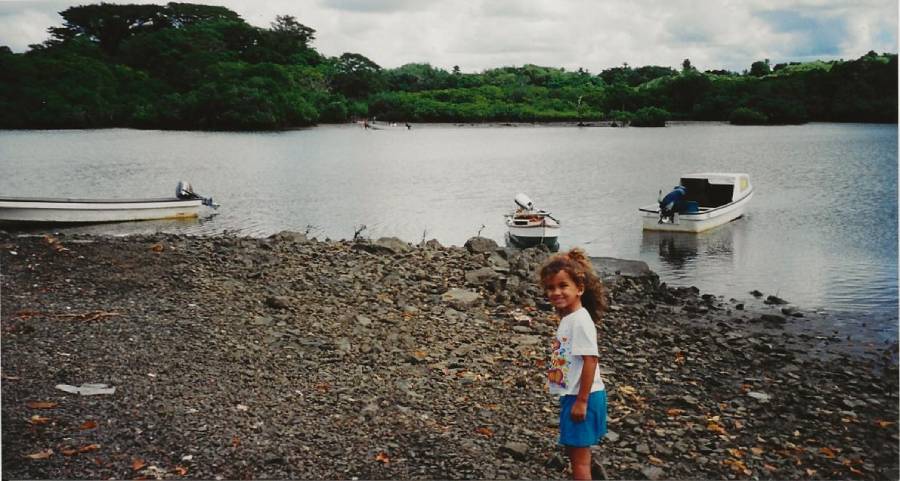
It was quite miraculous really what happened next. There were a few men hanging around their boats and Dad started randomly chatting with one guy and told him how he used to come here as a kid with his father and would go out to Bau Island. Well, of all things, this guy lived on Bau Island and was actually headed home and invited us to come along! We all loaded onto his little outboard motor boat (no life jackets and Allison was four years old… what can I say, it was spur of the moment). It was only about half a mile out in the delta – a tiny little island. When we reached it, he asked us to wait on the dock while he went over to the chief’s house to ask permission for us to walk around. While we waited and quite frankly I wondered what had we gotten ourselves into, Dad remembered and explained to us that Bau Island was the ancestral home of the “chief of chiefs” -the former king of Fiji. Even now the tribe that lived on the island were his descendants. Also Fiji is very traditional and it is customary when arriving at a tribal village, one obtains permission to enter.
Our new friend happily came back and said he got the OK and proceeded to take us on a tour of all the interesting features of the island. He pointed out a building where Queen Elizabeth had visited in 1982, some rock formations that he explained were historically used to bash in their enemy’s heads back in another era. He cut open some coconuts for us to try the water inside. You couldn’t have arranged for a better tour.

Eventually he took as back to the mainland the way we came. It was truly an amazing day. When we got back to our hotel, I remember the desk clerk asking me what we’d been up to that day and I said, “Oh we went out to Bau Island” and he looked at me in surprise – “Bau Island! I’ve never been there my whole life”. That exchange really struck Dad, that he truly had grown up in a magical way – not only just the allure of the tropical paradise, but in a place where his father was well known and respected; which gave Dad the opportunity to see things that others did not.
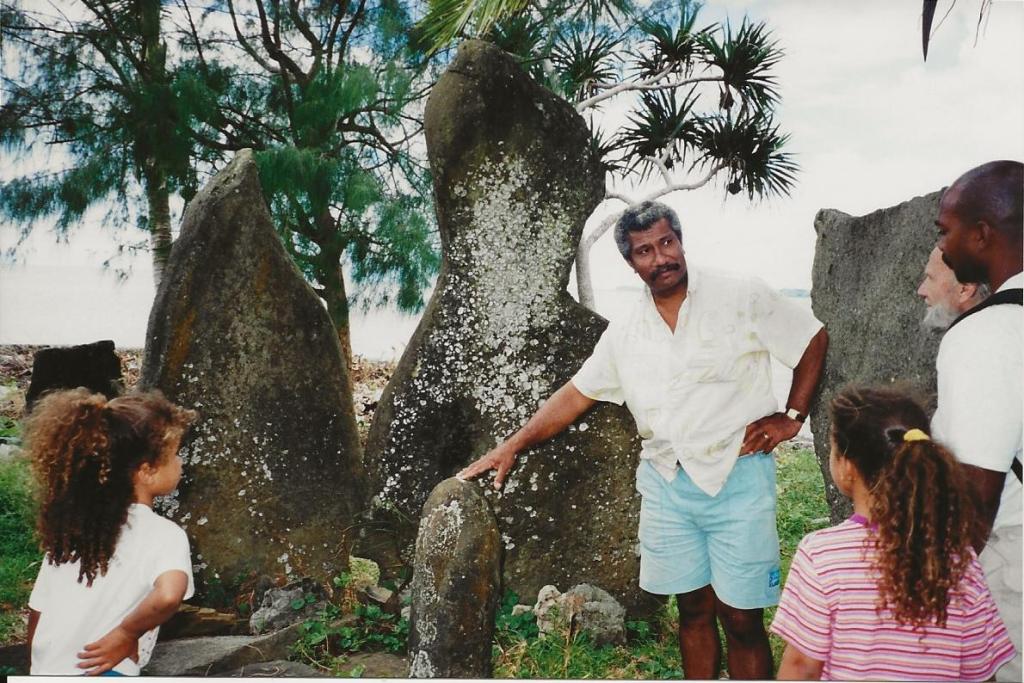
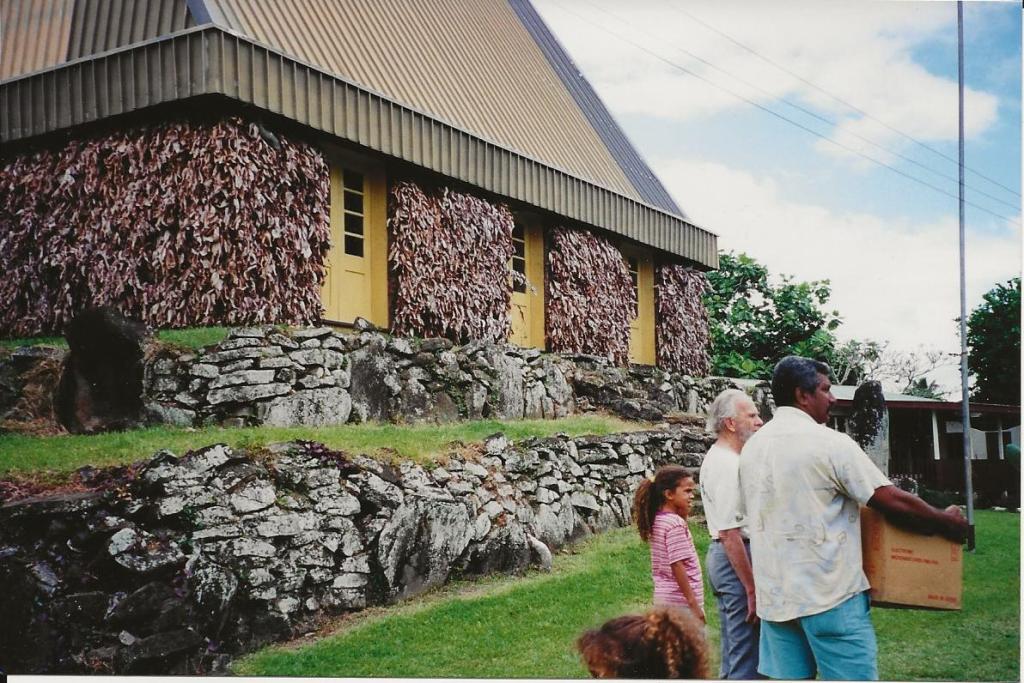
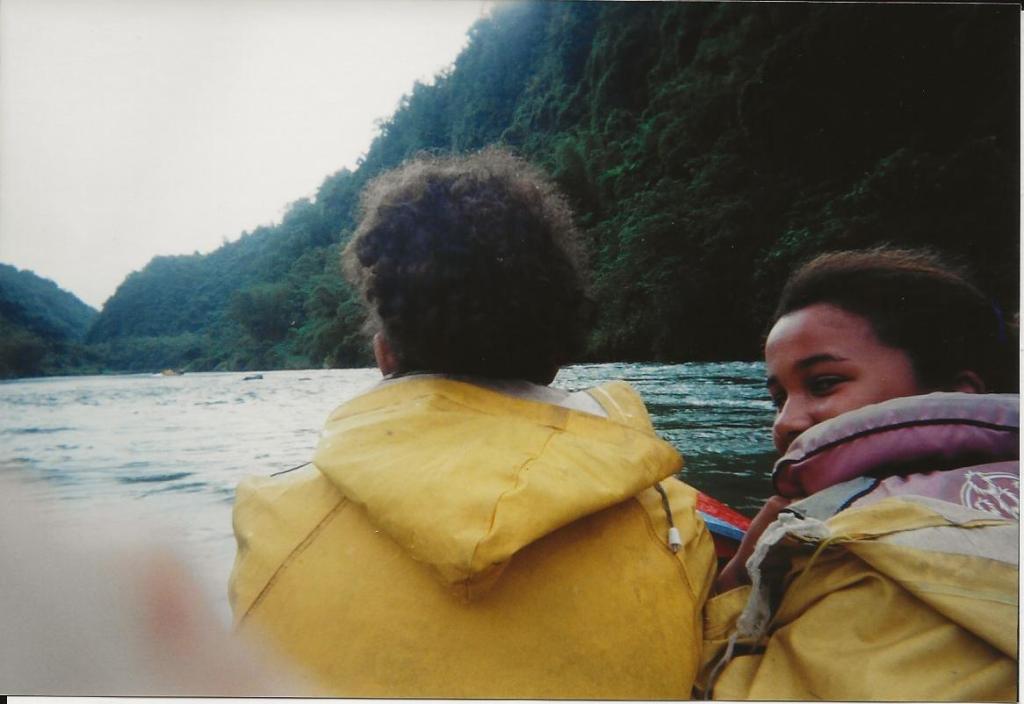
One more quick story. I don’t want this to be about my travels but about 5 or 6 years after that trip, both Mom and Dad met us in Fiji once more. We all stayed at a nice relaxing resort on the Coral Coast. At some point, Dad went to the concierge desk and booked a river tour for all of us. Had I read his memories of growing up in Fiji and exploring the rivers, this would have made complete sense. Maybe he told us while we were going upstream, I can’t remember. It was a drizzly day but that didn’t stop us taking outboard motorboats once again (this time with life vests) far up a river to a remote village where we were served lunch. Again, even though it was an arranged tour, the first thing the guide did when he arrived was to go let the chief know the group was there. Now reading about his accounts of going up rivers with his parents, I hope it brought back some warm memories for him.
As I mentioned at the beginning of this post, thanks to Darelyn, the following are some recollections written by her mother, Dad’s sister (or to me, Auntie Loma). I love how they tie is so well with Dad’s memories.
Loma:
I remember going to church in Suva at a little Presbyterian/Methodist church and to Sunday school there. My sister and I sang a duet once at the SS Anniversary.
The best past time in Suva was swimming with friends. Each afternoon we would walk down to the Sea Baths and spend our time swimming, everyone knew how to swim almost before they could walk. It was the best of times.
Sometimes we would go for picnics with the family in a launch and often go to a little island not far away
Our house was a timber home with louvered windows that could be bettered down in hurricane season. We lived on a hill with a beautiful view of the Suva harbour and distant hills. We would watch the big tourist ships coming and going out of the harbour past the reef.
My father owned his own building construction company and went to work each day, which was only about 20 mins away by car. He would come home for lunch each day and take a 20 min nap before going back to work. My sister and I would often go with him in the afternoon, after school to inspect buildings. Sometimes we would climb over the new building sites with him or sit and wait in the car, if we got bored we would just leave and walk home.
My older brother, Walter, was tall and thin and used to frighten us children by putting his false teeth on his tongue and race after us.
I remember our next brother Milton, being very lazy when he was young and he said when he grew up he was going to have cement all around his house so as he wouldn’t have to mow the lawns!! As a boy he used to ride his bike to and from school and we girls had to walk. Once he was showing us how he could ride without holding the handlebars….and landed in a deep gutter!
My school days in Suva involved attending the Grammar school. It was quite a walk from our home and often we walked in the rain, but we loved walking through the puddles. We only attended for half the day as the weather was unbearably hot. In Social Studies we learnt all about New Zealand.
While we were in Fiji we had a lot of missionaries come and stay at our house.
Because my father had his own business I don’t ever remember being in need of anything. We had an abundant lifestyle. I think my mother must have found it difficult when their business first started in Suva. She used to say she only had one good dress for going out and had to come home and wash it out for the next day. But we as children lacked nothing.
I never knew my maternal grandparents as they had passed away when my mother was young. She used to live with an elderly couple Mr. and Mrs. Edward Smith, whom we called Aunty Smith, after her husband had passed away.
My paternal grandparents lived in the Newcastle area in a brick home. We didn’t see them very often as we were living in Fiji. I remember as a young girl I stenciled a black velvet cushion for my paternal grandmother. My grandfather lived with us in Burwood, the last years of his life after his wife had died. He had a little room at the back of our house and every night we could hear him reading the scriptures out loud before he went to bed.
My paternal grandmother come to Australia when she was 17 years old on the “Plimsol” sailing ship. Her doctor had told her that when she went over the Equator, she would get rid of her rheumatics, which she did!
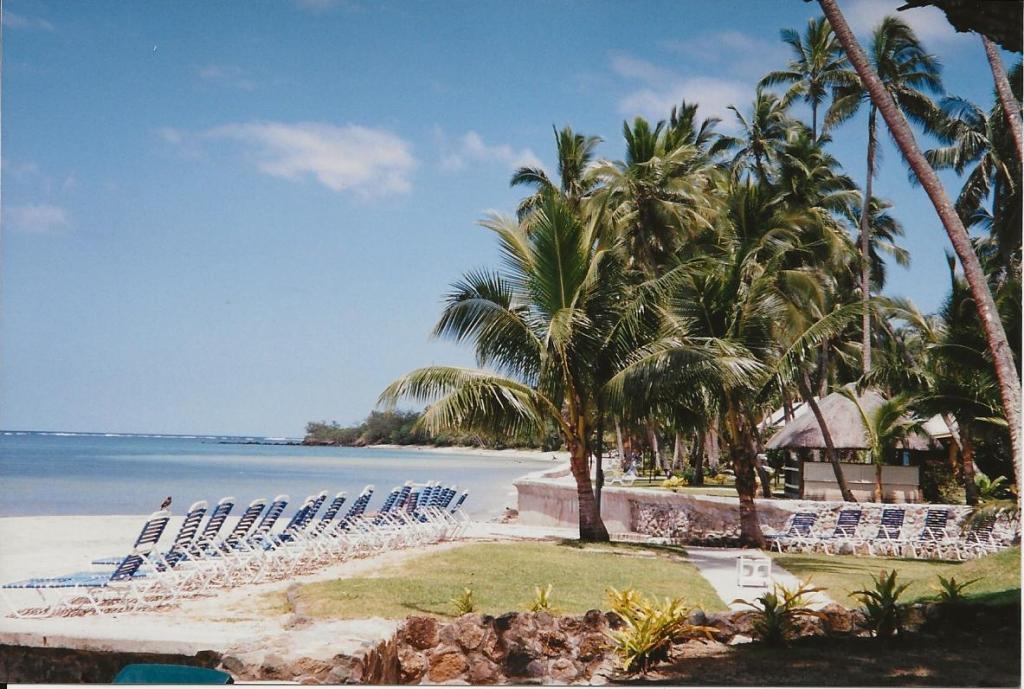
Mary: So all that to say if you haven’t been to Fiji you really should go. It has all the South Pacific tropical paradise appeal; white sandy beaches, coral reefs, beautiful outer islands, snorkeling, etc., but on top of that Fiji has a unique family connection.
 From the Land Down Under to the Rising Sun
A fabulous read. Thanks for putting this together. A very big task but well worth it
LikeLiked by 1 person
I did like this blog a lot. And Auntie Loma’s memories add a different perspective of their life in Fiji. As children of Milton and June, we did hear bits and pieces of life in Fiji but most of Milton (Dad’s) experience is written in his auto-biography.
LikeLiked by 1 person