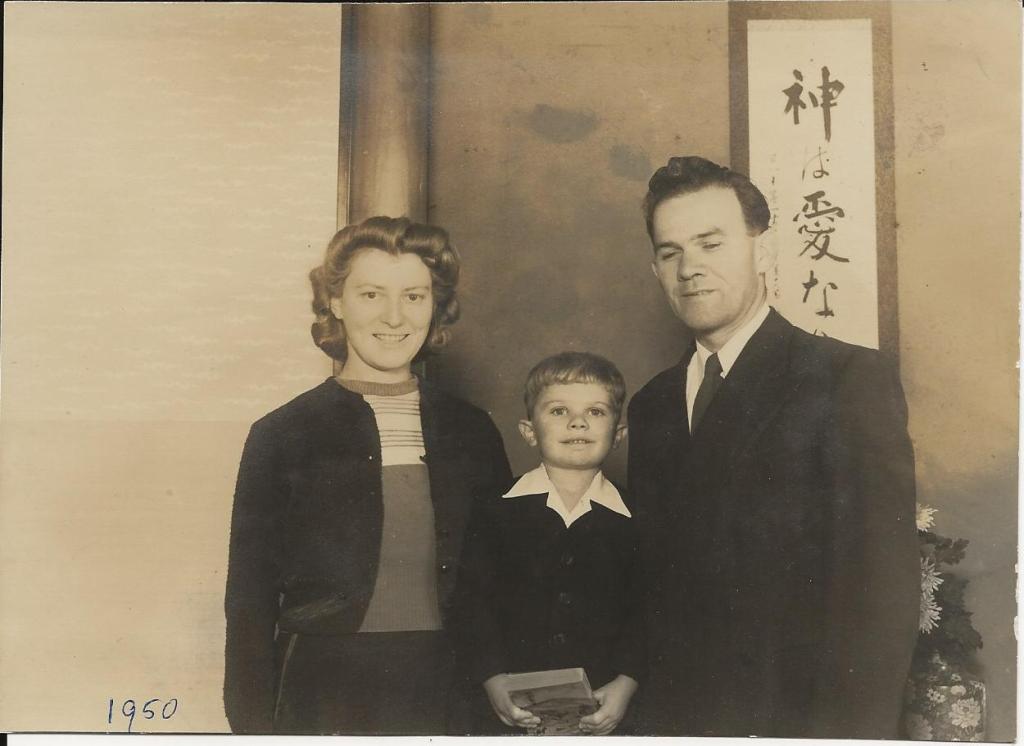
The story continues from the Hello Adventure – Big Box post where June & Milton arrived in Kobe, Japan with their massive box with all their belongings. Their destination was Tokyo/Yokohama and by a miracle the ship continues up there instead of dumping them in Kobe, where they had no contacts. At the end of the post, they had arrived in Tokyo harbor, three days before Christmas, 1948.
Milton:
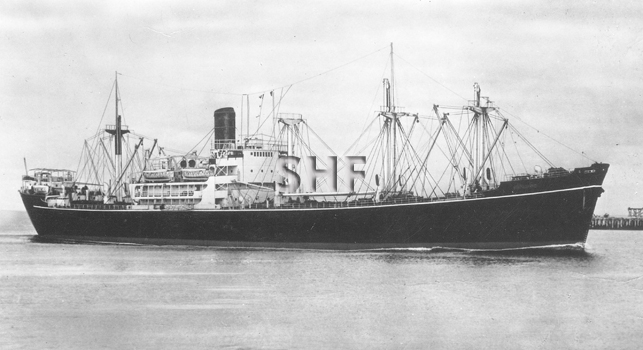
The captain was furious when he saw the tiny amount of goods his ship had been sent up to Tokyo to load. He said that amount could have easily been sent by train to Kobe and he could have been “on my way home by now”. He could not understand why the ship had been sent all the way up to Tokyo. But we knew and we were singing inside at the wonder of it all.
Our missionary friend, Bobby Wright, who came to meet us hurried off to find a truck for our big box and when he returned, the truck backed up and the ship crew began to lower our crate. The truck sagged and looked as if it would be crushed. The vehicle was obviously too small. The box went back up into the air and the truck driver jumped back in and took off.
June:
A worker from the shipping company’s Yokohama Branch brought letters that had been delivered from our family and friends in Australia. As we only had one Australian pound in money, we hoped that someone in Australia had put a cheque in an envelope for us. No one had guaranteed to support us and there was no cheque. We did not tell Bobby that we had no money as he directed us to a Japanese trucking company so we could arrange to have our box-container and all our bags taken to the house in the Omori suburb of Tokyo. Milton followed Bobby all the while, wondering what to do. A winch was used to put our container box on a large truck. However, the box was too wide to fit on the truck. I was so relieved because I knew we had no way to pay for it anyway.
Milton:
We stood gazing at the box. A U.S. Army sergeant came over and asked us what was the problem and we explained the predicament. “I’ll fix it,” he said, “leave it to the Army.” He called a big military truck over. Once again, the box came down. It overlapped the sides of the vehicle and had to be elevated again. The truck driver drove away, and the big sergeant came back over. “OK” he boomed, “come back here in the morning and I bet I fix you”. He strode off to his office and we left to go to the place Bobby had arranged for us.
June:
These were the post-war days, and the Americans were occupying Japan with soldiers. One of the Americans saw that our box did not fit the Japanese truck and said, “You are missionaries, aren’t you? I will get a bigger truck to help you. It will not cost you any money.” My faith in God soared.
Milton asked Bobby about changing our one Australian pound into yen to be able to buy a train ticket to Omori, but there was nowhere to make an exchange. Then Bobby said, “Anyhow we non-Japanese have the same privileges as the Occupation Army, and we can ride on public transport free of charge.”
He guided us to a house in Omori suburb where we were given the use of an upstairs room that Bobby had found for us in a carpenter’s house. The carpenter, Mr. Mizuno, was a Christian who attended Bobby’s church. He was lending the room to us and as this was so soon after the war, it was difficult for anyone to find even just a room to live in. Many people were homeless.
It was a six mat (tatami) room. Which works out to be about nine square meters or just under 100 sq. feet. I realized that our double bed alone would fill the whole space. Then we had two bicycles, one year’s supply of food, five year’s supply of soap and all our clothing and furniture. What could we do?
I was struck at that moment that the Japanese language I had learned in Australia was of no use at all. I had learned textbook words such as: “This is a book. That is a pen. This is a red book”. You couldn’t make conversation with that. What I should have learned was “Where is the toilet? Where do I wash clothes?”
Milton:
The next morning, Bobby and I returned to the port and reminded the sergeant of the problem. He called the motor pool, and they sent the biggest vehicle I had ever seen. I counted 24 wheels; it was one of the heavy equipment trucks they used to transport the great Sherman tanks. Our box sitting on the back of that truck looked like a little matchbox sitting on a table.
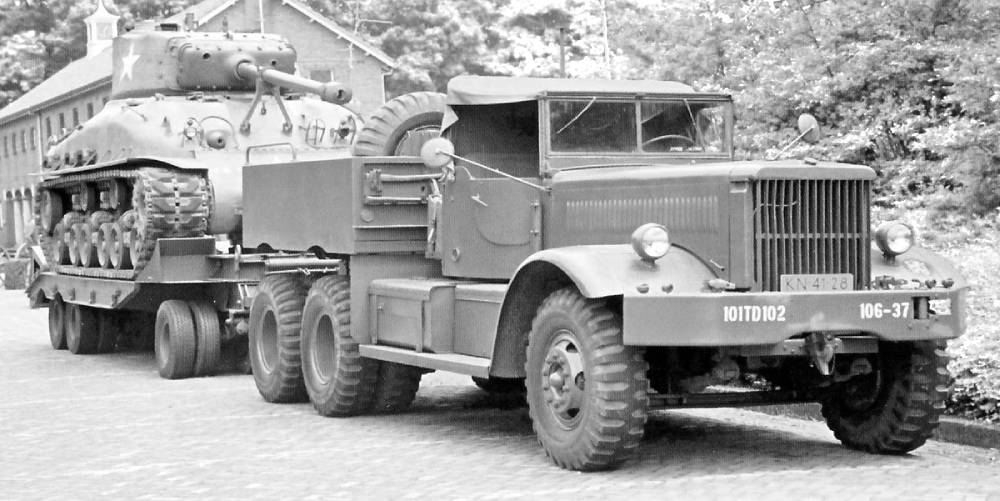
We climbed onto the back of the trailer and held onto the tie ropes that held the crate in place as we sped up the road to our suburb in Tokyo. The driver turned off the highway and picked his way along the shop lined streets towards our address. When he had navigated the truck to the shopping center nearby, he stopped. The truck was just about touching the shops on both sides of the street.
“We can’t go any further.” He called and jumped down from the cab.
The G.I.’s untied the ropes and pushed. The great wooden box slowly slid over the side of the truck. When it crossed the half-way point it tipped suddenly and crashed onto the road. The jolt split the box in two and the contents came gushing out. The plywood backs of cupboards we had packed full with cans of juice, cartons of soap, underwear and dresses flew open with a ping. With the sudden stop the road sparkled with a mass of “riches untold” in the eyes of the crowds who gathered. Due to war rationing, Japanese hadn’t tasted sugar for years and here was a three year’s supply lying in front of them. They rarely saw soap and here were dozens of bars of soap scattered across the road. It must have been a topic of talk for days, to tell of the “millionaire” missionaries coming to their town. We had soap but no money. Our Japanese landlord a Christian man himself, and a carpenter, rushed to our aid. The G.I.’s picked up armloads of goods and trekked down the lane.
We had left the summer heat of Sydney, were in the icy cold of a Tokyo winter. But we were warmed by the kindness of our friends. Especially the G.I.’s. They didn’t’ work for a tip – in fact, there was no way to pay them. Their currency was their own Army script. Most people lived unaware of the overwhelming generosity of the average American soldier in those days. They seemed energized by a compassion that flowed from the tragedy they saw all around them.
June:
As the truck got closer to the house, the narrower the roads became. Japan was then a country where people used bicycles rather than cars and the small streets reflected that. Finally, the truck could go no further. The four men pushed the box off the truck and the box burst open. Out came our five years’ supply of soap and boxes of sugar; things the Japanese had not seen for years due to the war. The four men carried all the stuff to the carpenter’s house. The Americans refused any offer of compensation for their work. God bless them.
Milton:
June sat in our small two room home trying to care for baby Stanley in a world where she didn’t have words. As she struggled, we kept dumping the furniture, the clothes, the soap, and sugar on the floor. She wondered where we would ever lie down. Let alone set up a home.
Our whole experience was overwhelming. Just two weeks before we had looked out on a bleak Kobe waterfront and thought if God can get us out of this one, we will believe anything. We had been carried up to Yokohama in a ship that the Captain vowed should never have come. The U.S. Army supplied a tank carrier to move out goods; and friends and G.I.s delivered them right into our rooms. And there were no bills. No one knew we had no money to pay. God did it all so that those who put their trust in Him would not be embarrassed like He said it would be. And then to top it all, He spoke to June.
June:
I arranged the furniture around the walls of the room and borrowed another room temporarily from the carpenter. It was very embarrassing. I did not know how we could live like this. We had brought a double bed with us but of course it was dismantled in pieces. There was no space to put the bed back together. We had no money to go to a hotel.
I prayed, “Lord, what shall we do?”
Just then an apprentice of the carpenter came upstairs and put an envelope in my hand saying: “This fell out of the truck.” I thought, “Lord, why do you put this envelope in my hand? Everything fell out of the truck. Why this envelope?” It was a card that had been given to us when we left Sydney that I had saved. The card had a poem and a verse and the verse was:
“The Lord your God in the midst of thee is mighty. He will save you. He is silently planning for you in love” Zephaniah 3:17
Milton:
Suddenly the presence of the Lord warmed the space around her. She knew He was there and was planning for us. He had, indeed, miraculously brought us all the way from Kobe. He had done the impossible, and He was planning more. She put the baby down on a rug as he drifted off to sleep. She looked out at the darkening sky and smiled: “It will be bright tomorrow.” She knew we were only at the beginning of a miracle journey. Within hours from our arrival, we started to understand what plans God had been working for us.
One morning, a few days after our arrival, the landlord told us the tenant in his house across the lane had left for the country. We could move in, at the same low rental price. The place was less than 50 yards away. We moved all our stuff over the next day. Our first home in Japan.
June:
The carpenter said to us, “A miracle has happened. I own the house across the street from this one. By law I could not ask the tenants to leave. Today they moved out and went to live in a small town to be with their mother who was sick. Now the house is vacant. You can move in there.”
So the next day we moved everything. If that vacant house had been any further away, we would not have managed to do all the moving ourselves. This house had one 6 mat bedroom with a large built-in closet (in Japanese, “oshiire”) and a 3 mat room opposite the front door. The kitchen was about half a mat in size. We fit all our supplies into the cupboards and even put our bed together. It seemed like heaven, a gift from God.
Milton:
Electricity was rationed and we had no running water except for what spurted from the hand pump over the well by the front door. June washed the baby’s things and ours with the ladies at a common laundry with water straight from the earth barely above freezing temperatures. Gas was restricted to an hour from 5 to 6 in both morning and evening. We were practically devoid of cash but were loaded with canned juices and army rations.
One day the lady who lived next door to us spoke to June and June had an urge to give her a few bars of soap. No big deal, just a friendly gesture from the newcomers. We couldn’t verbalize much yet and thought a little token might say something. Apparently, it spoke volumes as the lady returned with an armful of vegetables as a gift in return. We ate the carrots including the leaves above the roots.
This experience introduced us to the concept of “okaeshi”: the Japanese instinctive reaction to receiving a gift is to give a gift back in return. Consciously they feel appreciation, but subconsciously the receiver of a gift is quickly trying to get out from under the “on”, translated basically as a debt of gratitude. Nevertheless, we loved the kind lady for her gift, and she seemed to like us too.
Mary:
Dad’s comments about “okaeshi reminded me of a a classic example of this gift giving tradition involving Mom – when we lived in Tanashi (which is now called Nishitokyo or West Tokyo) there was a time when we were one of the few households on the block to have a car. A young couple, a few doors down, was expecting a baby and asked Dad in the event of a sudden need to get to the hospital quickly, would Dad give them a ride. It never came to a crisis, but Dad happily drove them to the hospital on the day that she needed to get there. When the new mother returned home from the hospital, someone, probably the new father, brought over an exquisite thank you gift (an okaeshi) . I don’t remember what it was exactly but would imagine is was a fancy box of fruit or sweets. Mom was horrified that they had given such an expensive gift. She must have done an evaluation in her mind and came to the conclusion that the value of the gift box far outweighed the simple car ride Dad had given them. She started scrambling around looking for something to give back as okaeshi to the okaeshi. I think Dave was there too and we tried to reason with Mom that if she gave a gift back she would just perpetuate a never ending okaeshi cycle. But, I am pretty sure Mom went ahead and sent something small over. I think the cycle ended there – at least I hope so!

 From the Land Down Under to the Rising Sun
I read your memoir and was touch by it. I found it amazing that in 1948/50 people didn’t have cars. I wonder what they thought of your family . Also the gift giving is cute too. Thank you for sharing with us those marvelous memories of your childhood.
Sonia Diaz
LikeLike
I am grateful that my parents wrote mini memoirs – I just edited them together but yes great memories. More to come 🙂 The car anecdote I wrote at the end was much later – early 70’s but Tokyo had/has such a strong network of public transport – cars were not a necessity
LikeLike
in the 60s and 70s traffic congestion in Tokyo was and still is a nightmare. But underground and above ground train network is one of the most comprehensive in the world. So owning a passenger car is not a necessity in Tokyo. It is in smaller cities in Japan though
LikeLiked by 1 person
Thank you for making this blog public, as my heart is being so encouraged by this memoir.
LikeLiked by 1 person
I’m glad my parents work continues then 🙂
LikeLike