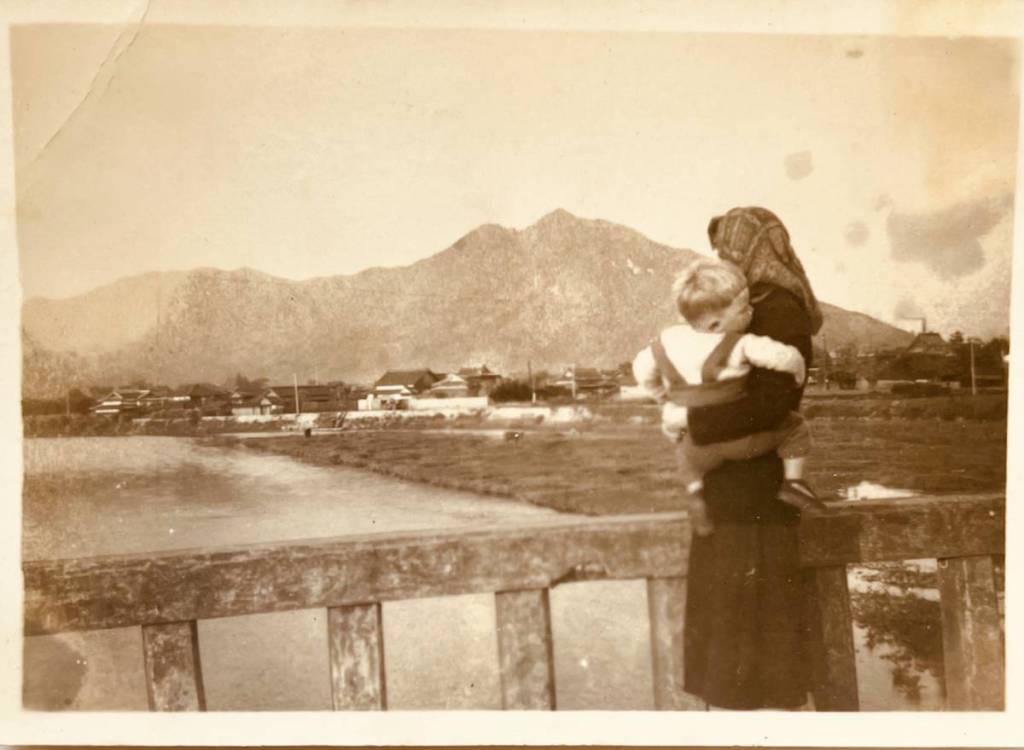
June & Milton’s arrival in Japan in two previous posts (Hello Adventure & The Big Box Adventure Continues) highlighted how their ship came to Tokyo and they got the contents of their big box into a small house. Many prayers were answered and that theme continues. They were living day to day completely turning over their problems to God. Just to set the scene, it was early 1949, and church group they belong to does not give regular support payments. So without a guaranteed income, they were relying on churches and friends back home to send support without having received any specific commitments. They never knew exactly when they would have funds on any given day but when they felt God was guiding them in a direction, they made the decision to proceed. From Dad’s 1949 daily diary/appointment book, each day he jotted down Bible verses that he read and noted how it applied to their life. There are also notations that give a view into their day-to-day activities. Notes such as: “Was able to pay the electric bill today and buy fresh food which our bodies need we firmly believe.” or “Bought Stan a little toy that he likes” On one day he was thankful that the language teacher was not able to come as they did not have enough to pay him that day. (A public-school teacher had agreed to come to the house and teach them Japanese.) In one entry Dad said: “How we long to get this language”.
Within a few weeks of arriving in Tokyo, June & Milton felt drawn to move to Kyushu and that is where we pick up their own words.
Milton: We had left Australia being a little naïve about our denomination’s critical attitude towards other Christians. Our eyes were opened to the possibility of a closer walk with God through the readings of the lives and writings of other Christians. During the first weeks in Tokyo, whenever I took a break from study, I curled up with a book by veteran missionary Paget Wilkes or one by a Salvation Army officer. No one in my group ever connected with teachings on faith and power. But these books did something to me. I felt a closeness to the Lord I had never experienced before. June and I were in the mood for spiritual adventure. The very traditional and senior missionaries of our group (Plymouth Brethren) in Japan were strictly against any new ideas. They came from England and Ireland and were ready to argue for what they saw as the faith of their fathers. They didn’t like the questions coming from us; the new ones from ‘down under’. They felt so strongly about some doctrines that they would rather play ping pong downstairs at the language school than attend the chapel hour in case some lady prayed out loud. This was their conviction and our problem was that we did not share it with them. We felt we would be a thorn of irritation. We longed to move out from Tokyo. Also, June was losing weight. The pain diagnosed as “wind” had returned. It was impossible for both of us to travel the long way to the language school each day since we had Stanley to take care of; we prayed about leaving for a more rural environment. We asked the Lord for a place with ground for a garden and even fruit trees so we could eat fresh food again.
Before leaving Australia, a businessman who had spent time in Kobe gave me the name of a Christian dentist there. I had written to him (Mr. Ishihama) earlier and now in the middle of our search for leading, his reply came. He wondered if we would be willing to go to Kokura in Kyushu. He lived there for a little while after the war and was interested in a struggling little nucleus of a church. Even if we spent the days studying Japanese, he felt our presence would be a boost. I decided to do down with him and look at the city.
June: Mr. Ishihama of Kobe pointed out that, “Nearly all the missionaries are in Tokyo. I suggest that you go and work on Kyushu Island”.
Mary: Dad’s Friday January 14th entry: “Letter from Mr. Ishihama of Kobe with interesting news of Kyushu.” And then on Sunday, January 23: “Exodus 23:20 ‘Behold, I send an Angel before thee, to keep thee in the way, and to bring thee into the place which I have prepared.’ This week to be a week of special prayer for guidance from God as we think of Kyushu.”
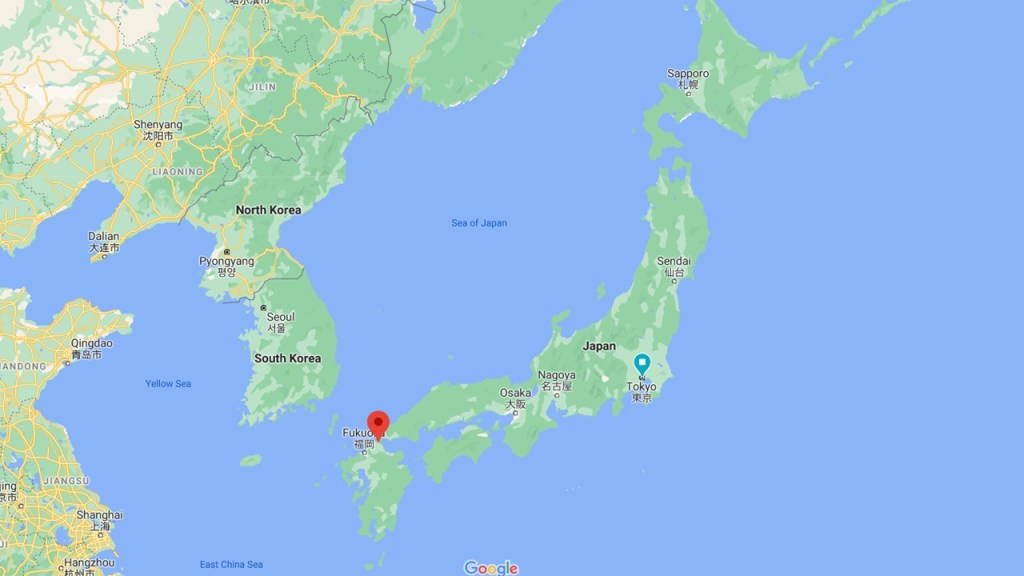
Milton: Early one frosty morning in late February, I left June and Stanley in the little house and walked up the hill and through the park. My cheap gloves had worn a hole in my index finger, and I felt the numbing pain biting into it as I clutched the suitcase. But we were moving forward and doing something about our lives; a flash of joy spread warm all over me. I met the dentist in Kobe and that night we pushed our way onto a Kyushu bound train. We stood in the aisle, jammed back-to-back with dozens of travelers. There was no fear of falling, even in sleep. Along the way my energetic friend pushed his way to the window and bought some buns and a few apples at a station. We ate apple sandwiches through the night. They have remained a favorite way to eat apples ever since. Twelve hours later, we stepped off the train in Kokura, Kyushu.
God led us to find a place to live almost immediately. It was a couple of rooms to rent in a place that used to be an inn. It was across the road from an unused racetrack. I imagined it had been a pricey place to stay in the past, but it was cheap now and the tracks were ours to jog on. I went back to Tokyo with the good news. We arrived in Japan with only one friend to help us and little money. We were now to go south with no one to meet us, only a place to live and still very little money. God was taking us further along the miracle road.
We started packing again. Our carpenter landlord kindly sent his workmen to crate everything in small boxes. Our bank balance was low, but we moved toward the deadline trusting that we would have money to pay for all this activity. A businessman friend of our landlord, Mr. Hosoka, suggested he arrange to have the goods shipped and purchase the train tickets for us. He believed a foreigner trying to negotiate with the transport company was likely to be overcharged. He said he would make all the necessary payments and collect from us the following Friday, March 25th.
June: When we first left Australia, we had all our possessions in one big container but this time we had put them in boxes and bundles ready for the train journey to Kyushu Island.
We arranged for him to come and get the money for the tickets on Friday the 25th. We did not have the money, but we believed that God would send us the money in time. Each day we prayed for the money for the tickets to go to Kokura. We expected that God would cause someone in Australia to send us a cheque in an envelope.
Milton: The new week opened without any support money coming. But we had plenty of food and there was plenty of time before the deadline. The workmen went ahead nailing up the crates and by Wednesday they were finished. We were all packed up and the whole house looked like a warehouse. Still no money. I thought, how exciting to have the money come the very day it was needed. Really a good story to tell my children someday.
June: On 20th March 1949 we still had no money. On 21st March we still had no money. On 22nd March no money. 23rd March there was still no money. It seemed that 24th March was our last day for the mailman to bring us a letter with a cheque in it, because the man was to come by at 9 a.m. on the 25th and the mailman always came around 10 a.m. This would be too late. The mail came on the 24th and still no cheque. Then we began to pray that the mailman would come early on 25th March, with a letter containing some funds.
Friday morning we knelt to pray at about 8 a.m. facing the window so that we could watch the footpath and see the mailman if he came early. And before 9 a.m. we were thrilled to see the mailman come early for the first time! Praise the Lord, we said. There were letters from Australia. But as we opened the letters, there were no cheques. We carefully searched each envelope to no avail. We could hardly believe it.
Milton: A cold chill of embarrassment rose like a mist in my mind. What would I say to the kind man who was putting his neck out for us? Here we were coming to the bomb-cratered city to help our needy brothers and we start out by owing money and wasting the time of others. What would happen to the crates if we can’t move? Maybe he would forget and not come. That was about the only hope I could latch onto. After lunch, we saw Mr. Hosoka walking towards our place, striding along like a man with a message.
June: I said to Milton, “You go and answer the door. I don’t know what to say. We cannot tell him that we have no money.” Milton went to the door. After a greeting, the man said: “I see you are all packed up ready to go to Kokura. I hope you won’t be too disappointed, but I advise you not to go yet.”
Milton: I took a deep breath and went to the entrance to meet him. The sliding front door rattled open. He gently closed it behind him and bowed. I bowed slowly, too confused to know what to say except “Welcome”. Then he spoke: “You will probably be disappointed to hear this, but I have not bought your tickets or arranged to send your goods.” (My heart sang ‘Not at all’)
He continued: “This must be very inconvenient for you, to be packed and unable to go. I have heard a rumor that the yen value will drop within a few weeks. If this happens and I think it will, you will save many thousands of yen if you can wait.”
I hadn’t invited him up into the main part of the house. He was still standing in his shoes at the front porch / entryway (in Japanese “Genkan”) I stayed there stunned for a few seconds He looked at me apologetically. God’s timing for us was coming into focus as I smiled and said:
“Why sure, that’s fine. We want to do just what you say. Yes, of course if you advise it, we will gladly wait here.”
June: Milton said, “All right. We will wait. We’ll take your advice.” Mr. Hosoka was surprised that we were so calm about it. He thought we would be disappointed and frustrated as we were all packed up ready to go. No money came from Australia until after the 1st of April. And had it come sooner it would not have exchanged for nearly as much yen. Once the Australian pound became more valuable, God caused Christians in Australia to send us money. They did not know about the change in the exchange rate, but they were moved to send money. We were able to buy 3rd class tickets and pay for the shipment of our crates and still hold some money in our hands. God’s timing is perfect.
Post Script (Mary): Dad’s note on the day in February when he caught the train to Kobe to meet Mr. Ishihama was interesting. He had sent a telegram to let him know when he would be arriving but had not heard back. “It has been fascinating. Trusted the Lord to bring Brother Ishihama to the station at Kobe and so it was. He didn’t receive the first telegram but received one from June this afternoon.” Such was life in 1949 post war Japan. No phones! Based on Dad’s diary, there was a steady stream of letters to and from family and friends in Australia. Dad would note who they received letters from as well as how many letters they mailed out each day. I also found it sweet that there was a note that his brother, Wal, shipped a crate of oranges.
For me the small comment about the apples and buns on the train ride was very amusing. My siblings can attest during our elementary school years, Mom & Dad packed some interesting lunches for us. Sometimes our sandwiches would get some quizzical looks from our classmates. I had assumed Dad’s propensity to put fruit on bread came from his Fijian upbringing but now I find that, the unique sandwich he ate on a long train ride in 1949 would change our lunches in the years to come. I also now look at Mom’s raisin sandwiches (yes, bread, butter & raisins) in a different light. Their early beginnings of scaping by with whatever they had made them very creative in the kitchen. There must have been a day when she didn’t have the normal sandwich ingredients and spied the raisins and thought well let’s just use what we have.
 From the Land Down Under to the Rising Sun
Nowhere more than in stories such as these do we see that the God of Abraham, Moses, David, and Daniel is the God of Milton, the God of Stan, the God of Gordon, and the God of so many others today.
He lives!
LikeLiked by 1 person
What a fabulous story
LikeLiked by 1 person
This is an inspiring chapter and although I have heard the story first hand, to hear June and Milton’s perspective in one format puts things in perspective. I’m assuming both of their versions come from their auto-biographies. The small detail that might have been lost is Milton went to Kobe to meet the dentist/. That was not trivial. The trip from Tokyo to Kobe must have been at least 12 hours by train back then. And assuming he went using a 3rd class ticket, means he stood most of the way, maybe sat on his suitcase. What a shock that fact must have been to his fellow Japanese travelers to see a Western in 3rd class (although they would have never displayed the shock).
LikeLiked by 1 person
So true.
LikeLike