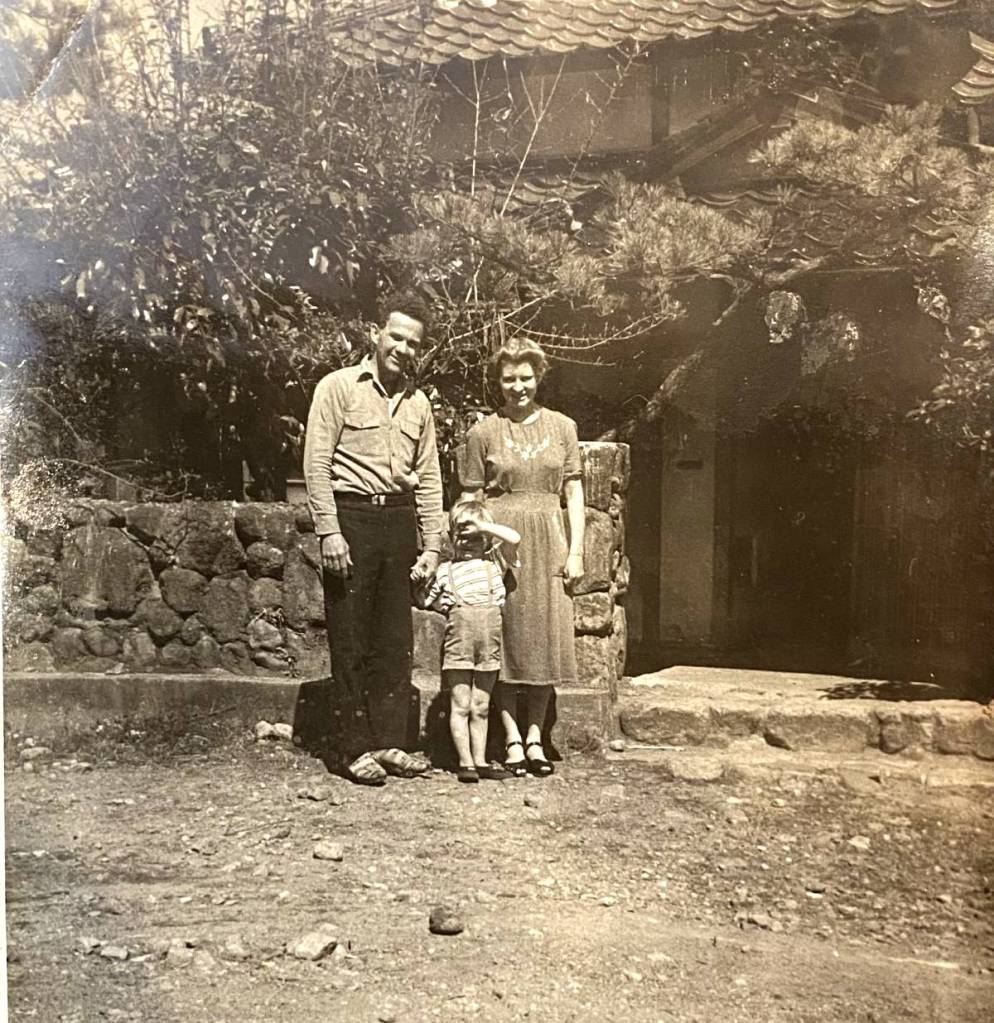
In a previous post, June & Milton decided that they wanted to move to an area on Kyushu Island that was in greater need of missionaries than the city of Kokura. For some historical context, this post transpires from late in 1949 through 1950. Japan was still very much in recovery mode from World War II which ended in 1945.
Milton:
Our next move was to investigate Oita, the capital city of Oita prefecture. We thought we were adventuresome until strangely, a very outspoken old Christian wrote us a letter from Australia. “You are still really trusting in your denomination for supply,” he said, “what will you do if they leave you?”.
“Complain”, I mumbled to myself. But he was prophetic. God was about to show us just what He could do when all human help failed.
We asked the bank manager of the Kokura branch to introduce us to his counterpart in Oita. That way once we moved, we could keep our money account with the same bank. He gladly wrote a letter. As soon as we travelled down to Oita by train, we headed for the Bank. The manager greeted us and served us the inevitable green tea. After a few minutes we got around to the subject of our visit.
“Actually, I don’t live in this city” he confided. “I commute each day from Beppu about 8 kilometers around the bay. So, I don’t know much about this place. However, my wife attends a Bible class in Beppu. There is a missionary there who might help you.”
He directed us to her place, and we took the streetcar along the rickety old tracks at the foot of the mountains and as we swung around the bend, we saw the hot spring city that was to be our first real home, sitting relaxed under the shadow of the steaming mountains.
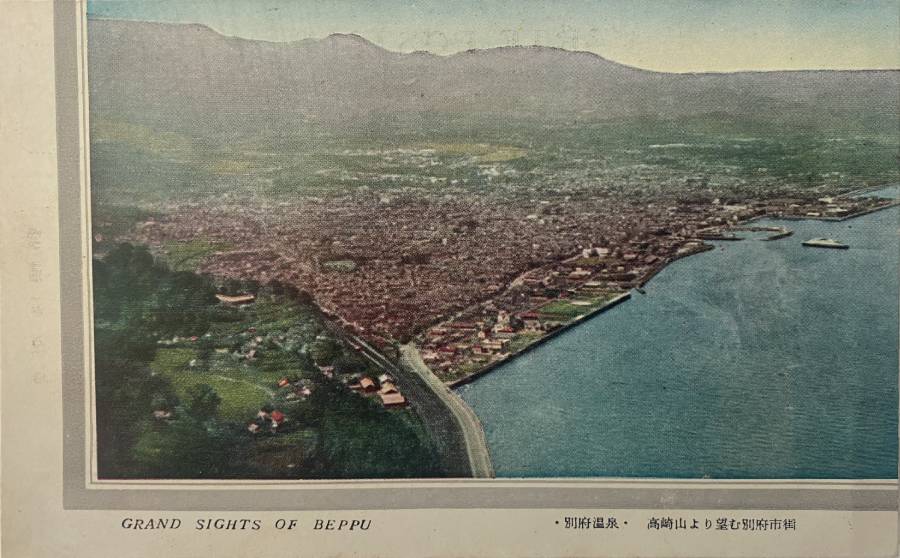
We visited the lady missionary who danced with delight. Miss Stephens was a veteran of prewar vintage and whose real work was teaching school. This was her first try at just missionary work with her Methodist church and she was lonely.
“There are 90,000 people here”, she enthused “and they surely need folk like you. I’ll ask the Pastor to visit you.” She gave us the name and address of a gracious old couple who had opened their home as a little inn for travelling Christians.
The following morning, a wide-smiling man arrived and introduced himself as the Nazarene church pastor. He was accompanied by his brother-in-law a local baker. They had heard about us from our new missionary friend, and they had a house to show us.
I had never explained to my Dad just how we operated in our denomination. I think he had it fixed in his mind that we were on a regular stipend as were his own Methodist workers. Though he helped us in any way we suggested with parcels sent in the mail, he never financially supported us. I was not about to report my financial needs or the fact that we got no stipend, salary, or pledged support even from our own home church. My father however, told all his children that he would provide a sizeable sum for each as they got married, to buy a home for their family. He wanted us to have it a little easier than he had. I didn’t apply for my money in Australia because I wasn’t about to settle there. Now as we planned to live in Beppu, I wrote and asked if a house in Japan came under the terms of his desire. If so, I would like to use half the money to buy a little place.
Our dream was a place with ground for a garden and with fruit trees. The place the pastor and his brother introduced us to had that plus a hot spring bath from the mineral geysers in the hills. We had half-jokingly talked about having a goat. The enterprising owner told us that he had just that in the back yard. When we arrived to inspect the place, sure enough, there was a beautiful white goat there. It all seemed like a fairy story. We decided to buy.
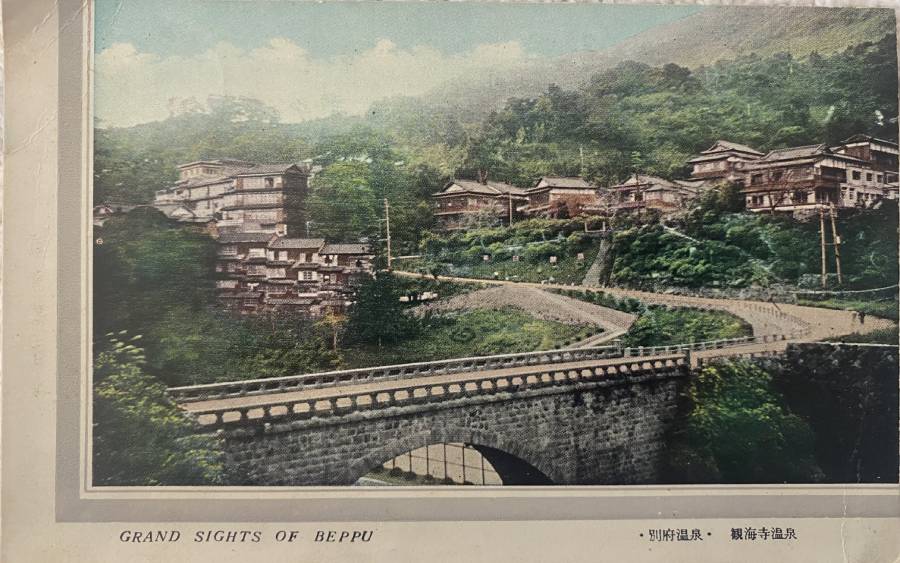
The man selling the house wanted cash. In those days there were no bills larger than 100 yen and the place cost ¥350,000 (about $1,000 dollars). We took a suitcase to the bank and filled it with 3500 one-hundred-yen paper bills. The man sat on the tatami floor and counted the money and then the place was ours. We moved right in.
Mary: in Dad’s journal he noted on Tuesday, September 27, 1949 “Entered first Home”.
Milton:
Within a month the goat died. It wasn’t a great loss because we discovered a farmer down the road who sold us goat’s milk fresh every day. When we got to know the goat herder better, he told us that the past owner of our house had bought one of his old dying animals to impress us and help our dream come true.
June:
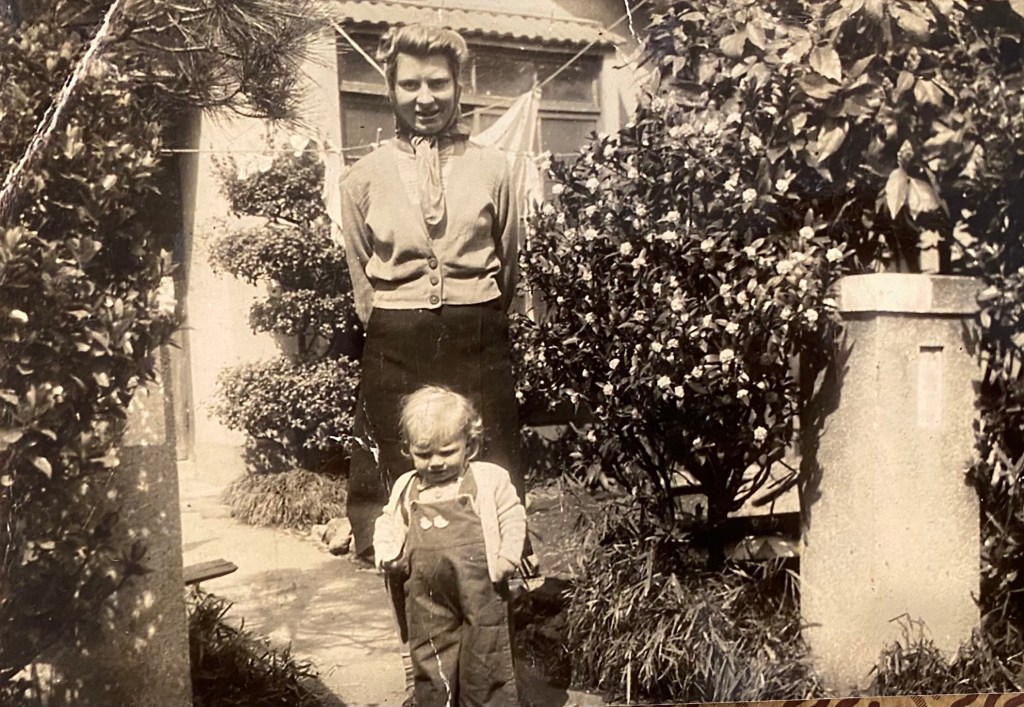
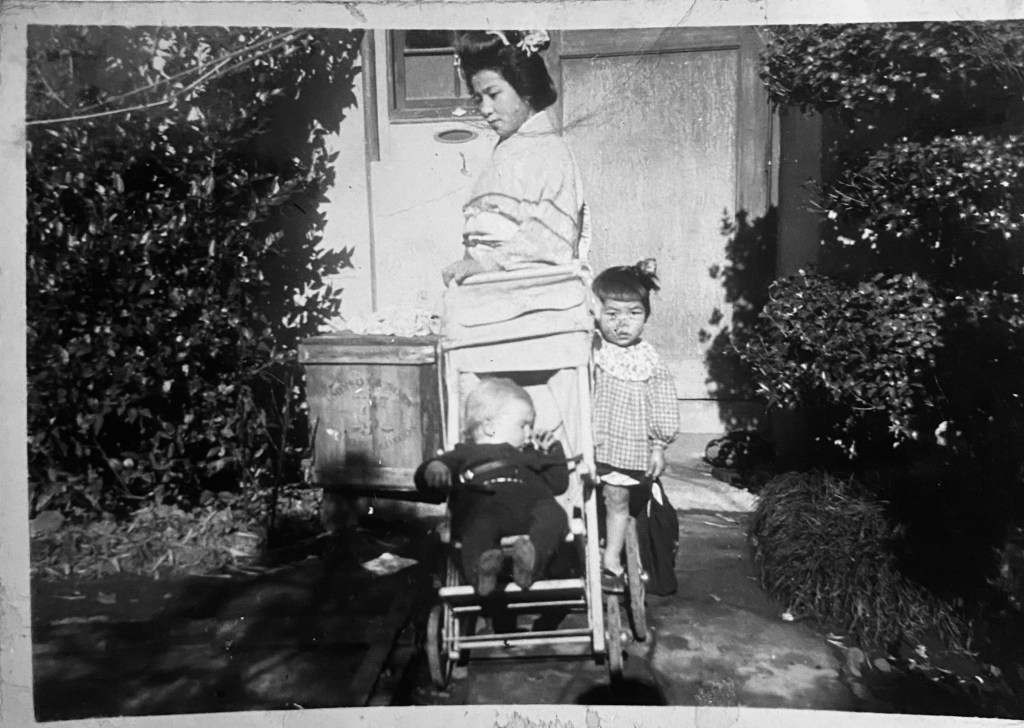
With Milton’s father’s money, we were able to buy a small house. It had only two rooms and a small kitchen about 12 feet wide and 3 feet deep with a pump to bring water to the kitchen and a sink. It had a small garden. It seemed like great luxury. A man not far away had a goat and we bought goat’s milk from him daily for Stanley. We employed a high school teacher to visit our house and teach us Japanese twice a week and we had a maid to take care on Stanley on occasion, cook for us and teach us Japanese as well.
Milton:
Up there on the hill outside the lovely city of Beppu we settled down. At the back of our house a mountain sloped up toward the sky like a green Japanese fan. Across to the left, the high mountains turned purple in the evening sun. Through those high mountains ran the pass to Yufuin, a small hot springs town. We were happy there. Stan began his prattle filled life there. He knew more people before he was three than I knew at thirty. Our first opening into the Gospel ministry was because we happened to be his parents. June and I walked in the woods that autumn and gasped at the colorful softness of the leaves. One day June said: “If I stepped through this into heaven I wouldn’t be surprised.” We walked on the edge of a paradise but there were some clouds climbing into our skies.
June:
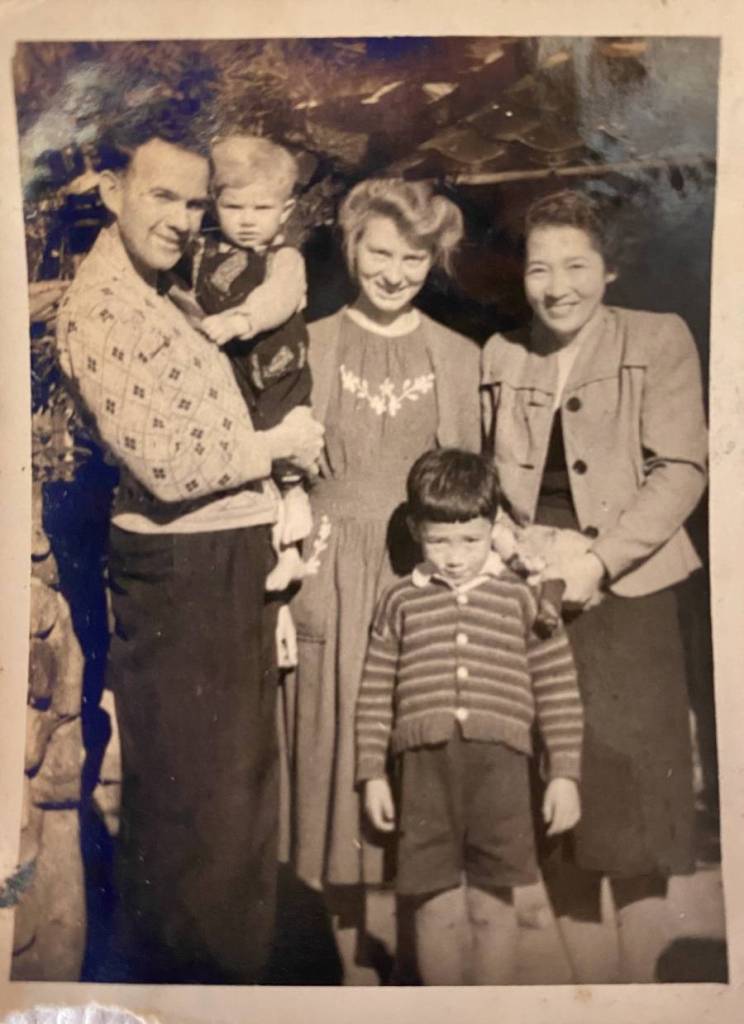
Milton spent the mornings studying Japanese with a Japanese lady and I spent the afternoons studying Japanese. Our son Stanley used to play with the son of the doctor of the neighboring rehab hospital and the son’s Japanese friends. The doctor’s wife told me that Stanley, then 2 years of age, spoke Japanese just as well as her 2-year-old son. At home we always spoke English to him.
Milton:
By early 1950, June was in pain. She was also weak and very thin. The Army doctor examined her at the U.S. hospital, and he knew immediately that she had gall stones. June was so thin that an operation in a local Japanese hospital was too dangerous. We prayed but seemed to be groping in the dark unable to find any guideline to lead us to the Lord’s will. June wanted to eat good fresh food as in Australia, but Japan then wasn’t geared for health. The streets were filled with weak, coughing people. Slowly we knew that the Lord was directing her back to Australia, within two years of our arrival. We were stunned by the thought but as we walked, one day among the gentle hills, the Lord let us know that it was good for her to go. She could tell our friends first hand how God had led us out into a wider fellowship among Christians. But we did not know how He would ever provide the way for her back to our homeland.
One day we learned that a commercial plane was flying from the Air Force base in Iwakuni. We contacted our Bank in Tokyo and found we had just enough money to pay the fare. June decided to go. The three of us travelled up the inland sea. On the morning of June’s departure while June checked her luggage and passport, I took Stan quickly to buy some milk for his breakfast. I had trouble finding a store open at that hour and realized it was getting close to her departure time and rushed back to the airport. The plane was taxiing out onto the runway. I saw someone at a window wave so holding Stan in one arm, I waved as the old propeller plane roared into the sky. The whole land was filled with a strange silence while we watched the black mark in the sky fade away. Then we slowly picked up our things and made our way back to the lonely little house on “Green Hill” (Midorigaoka) outside Beppu.
Milton:
One evening I was reading quietly when someone banged heavily on the front door. It wasn’t the traditional way to announce arrival as Japanese would use their voices rather than their fists. I rushed to the door and was greeted by two tall military police from the nearby base.
“Any G.I.’s here?” the leader asked.
“No, have you lost one?” I asked.
“We have a war on our hands,” he shot back. At first, I thought he meant they were fighting the upsurge in drunkenness and sex crimes by soldiers in the city.
“I bet you have.” I agreed as I closed the door as the jeep roared away. “The Army is really getting serious” as I headed for bed. I would soon learn exactly what he meant by war.
Mary: For some date context, North Korea invaded South Korea on June 25th, 1950. The base was U.S. Army Camp Chickamauga. Today it is the site of the Beppu City Peace Park.
Milton:
The next day I walked through the Army camp on my way to the city. It was like a beehive with jeeps and soldiers buzzing in all directions. There was a tense expression on the faces and even sometimes some scared looks. I went over to the chapel. The devout Catholic chaplain was walking up and down the aisle near the alter, reading a little book. That was the last time I saw him. I would later find out that he was gunned down by North Korean forces after he elected to stay on the other side of the river to care for the wounded during a retreat. I went in to talk to Ken Hyslop the Protestant chaplain/officer. Ken was an efficient officer but looked more like a pastor of a quiet country church. He too would end up a prisoner of war and would die in Korea. His wife Iris and children who we knew, would return to the States. Chaplains in the conflict were advised to take off the cross, a symbol of their non-combatant rank, as this seemed to energize the anger of the other side.
Mary: For those who enjoy more history, here is a link to an article about Chaplains in Korea where Ken Hyslop is mentioned.
https://www.army.mil/article/100572/Under_Fire_Army_Chaplains_in_Korea_1950/
Milton:
The skeleton staff and the families left on base reeled like people kicked in the back. News of tragedy after tragedy came from the Japanese newspapers interpreted to them by their Japanese housekeepers. Most Americans thought their forces had gone over to Korea as a kind of saber-rattling police force and were not mentally prepared for the onslaught of hate. The camp leaders on base asked me to take charge of the chapel services in the emergency until a regular officer came.
We received good letters from June. The food and the land agreed with her. She wouldn’t need an operation due to her new healthier diet. So, she worked in an office as she regained her strength.
June:
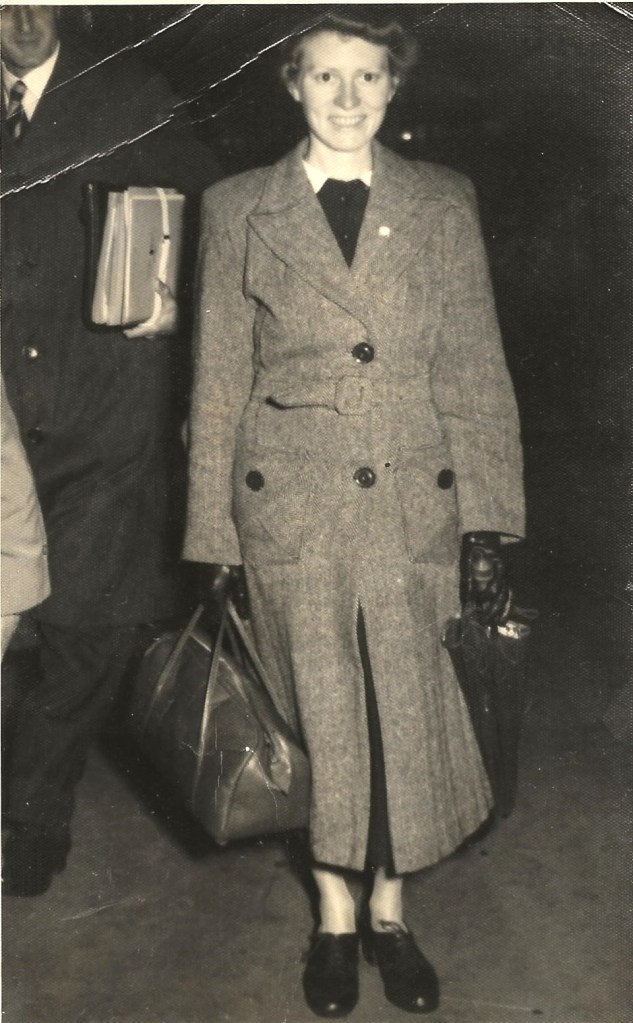
July 21, 1950 – Disappointing photo but you’ll soon have the living image. This was taken on my way to C.Y.C. Welcome at Pacific Hall. (Taiyuan of Yuill & Co is the ship) I bought an A.M.P. 35 mm projector suitable for slides and film strips. Erskineville Assembly gave us 31 filmstrips* worth £10 New and Old Testament stories. You can* translate into Japanese *scripts and the folk will be enchanted. Most of the stories are the Gospels & Acts plus Daniel, Amos, Joseph. It was worth coming home for. Newland Hall gave me £20 Bringing 4 tins honey, 1 lb. molasses, 40 yds plastic hose, ice chest, mattress, 2 gal olive oil, but need more, flannelgraphs. – Love June.
Mary: Based on June’s mention of the ship name I was able to find out that it set sail from Sydney for Japan via Hong Kong on July 28th, 1950.
Milton:
At the end of summer 1950 June returned. She was a day ahead of a typhoon. Stan and I went to Osaka to meet her. And we all returned down the peaceful inland sea. The next morning the storm raged up the waterway and hammered the port of Osaka and battered and damaged the ship June had just disembarked from! It was a kind and timely omen that God was keeping us just ahead of trouble.
Mary: Dad’s last sentence is the perfect cliffhanger to end this post – to be continued soon!

