Mary: Continuing the story from the last post, the following occurs between late 1950 and late 1952.
Milton:
Soon after June’s arrival back from Sydney, the U.S. Army informed me that a regular chaplain was on the way. A few ladies from the chapel called on us.
“Normally the chaplain on base is an officer with a rank higher than most of us,” one explained. “We don’t have the feelings towards them, we do to a pastor at a civilian church. But you have been like a real old-time pastor to us.”
“This is very nice, but it must be leading somewhere” I wondered.
“Would you allow us to give you a farewell shower?” one of them asked.
“Sure” I replied, “but what on earth is a shower?”
They told me it was just a simple party after the prayer meeting. We would play some silly games and have a snack at one of the officer’s homes.
After the prayer meeting the following Wednesday, we went to a house for the party. We played some games and then they brought out the refreshments. After we had eaten a cake or two and swallowed some coffee, one by one, they began to filter out towards the kitchen. Soon, they returned through another door with a bag or two in their arms. They deposited these in the center of the room until there was a little mountain piled up in front of us. Then the leader for the night told us to take it all home. The shower had showered…this was what it was all about: a huge pile of appreciation. We had no vehicle, but two men helped us fill up a jeep and a regular automobile with canned goods, mayonnaise, and other unseen luxuries. We had food on our shelves until we left for the next furlough!
That wasn’t the only kind act that came from the base while the tension of the Korean War continued. One example, when a group of missionaries were evacuated from the war zone in Korea, the move was so rushed, some of them only had the clothes they happened to be wearing when they fled. The army wives in our city emptied their own wardrobes and laid the clothes along the counters of the PX and invited the missionaries to come and select whatever they wanted. The following Sunday, the best dressed bunch of missionaries attended the Chapel services.
On Thanksgiving Day, we watched every G.I. on the Base adopt a ragged orphan for the day and share his meal with the kid. We saw the product of a Christian heritage of giving that made our strict but often hyper-other-worldish expression of faith seem cold in spots. However, we were learning; and we longed to be able to move into society and help more.
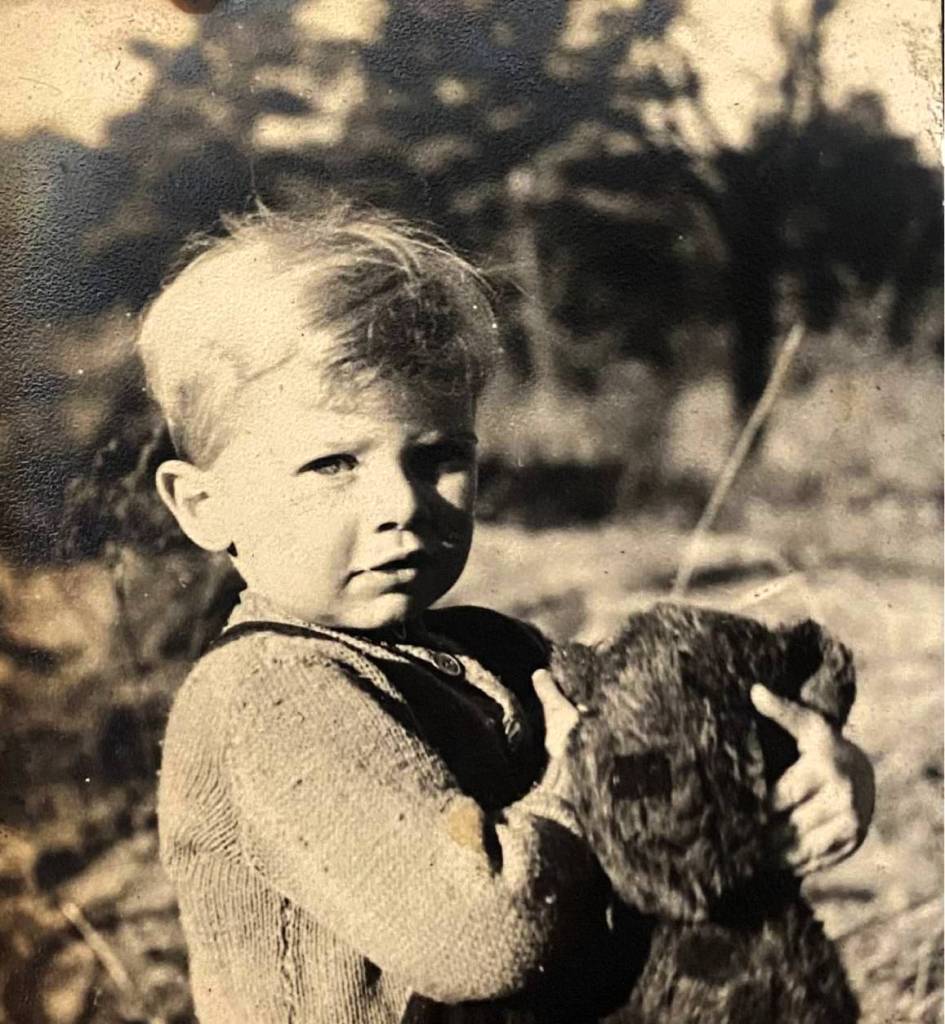
For a few months we kept out eyes glued to the study books and our feet on the ground near our little cottage. Stan roamed the area and into the home of the doctor in charge of the hospital below our home, to play with his son. The patients in the hospital were convalescing from accidents. They were fascinated with the fair-haired Western kid and Stan was glad to take part in some two-year-old dialogue with them. His friendship with the staff and the patients opened the door for me to minister a little to them; mostly giving away some Christian literature.
We were hesitant to get too involved in active service yet – until we had time to digest more of the complicated Japanese language. But we couldn’t completely resist the tug of the people to whom we had come to help.
On the first Christmas in Beppu we asked the city office if they would send along fifty of the poorest people in the town and we would provide a Christmas dinner for them It was only a token and it probably gave us more joy than our guests. After that, we discovered far more desperate people living under bridges and in abandoned bomb shelters, dug into the cliffs. The walls oozed moisture and the floors were wet. The fittings of the homes were made from old boxes and bags. Children starved and barefooted came to greet us, and their clothes were mud soiled and tattered.

We gave what little we could; when gift parcels arrived from home, we took the contents to the suffering people and went home to cry.
One day a patient from the hospital that was situated just below us walked into our entrance and asked to be led to the living God.
June:
The man was wearing the hospital garb of a patient from the small rehab hospital next door to our Beppu home. His name was Mr. Tsuchida. He had been working in a coal mine when there was a cave-in and he and a few men were trapped in the pit. Down in the mine he prayed to God and said, “If you allow me to get out of this mine alive, I promise I will try to know you.” He was rescued and first taken to the hospital near the mine.
Milton:
As he lay helpless in the casualty ward near the mine, he wondered about eternity. All the religious teaching he had ever heard seemed so empty now as he waited alone and helpless in bed. His mind longed for a living Creator who could be near to him without altars and ceremonies. Later he was transferred to Beppu, where the doctor told him some missionaries lived right behind the hospital. So, he had come to find the answer to his longing.
I took a Japanese Bible from the shelf and handed it to him as I opened my English one. Together we checked through the Gospels and Acts. In my mistake-punctured Japanese I told him of Jesus and of man’s sin. There was no need for long explanations; he was ready. My prayer was probably the simplest utterance in the history of the Japanese language, and he followed with a short plea. But he was saved.
June:
After that Mr. Tsuchida came to our house about 11 a.m. every morning and Milton and I took turns daily, explaining the Bible to him. Mr. Tsuchida read about Christian baptism and wanted to be baptized. We received permission from the Head Doctor of the Rehabilitation Hospital to use their bath. It was quite a large bath, like a miniature swimming pool. Mr. Tsuchida and one other man that Mr. Tsuchida had witnessed to asked Milton to baptize them and so he did.
Mr. Tsuchida was later discharged from the hospital and went home to his wife in another province of Kyushu Island. With the help of our Japanese maid, we sent him letters. He could no longer work because of injuries but he studied the Bible diligently.
(The Japanese Bible at that time was in incredibly old Japanese language). Sadly, he contracted tuberculosis. He knew he was dying but was full of hope of seeing Jesus who had died for him. There was no Christian church in his village, but his wife went to a bigger town and got a Japanese Christian pastor to conduct a Christian funeral for him. It was the first Christian funeral in that village.
June:
Around the middle of 1951 I caught a cold and kept coughing for months. By November I was running a fever every afternoon and became too weak to ride my bicycle. In December I went to one of the hospitals in Beppu. I lined up with the Japanese people waiting to be X rayed and have a test by injection into the arm. Probably most in the long line had tuberculosis (TB). The result from the tests were that the doctor said, “You have tuberculosis.”
He noticed that I was freckled. So he added “Keep out of the sun.”
“But I thought the sun was good for TB?” I queried.
“We used to think so. We used to put patients on the sand at the beach, exposing them to the sun but it made the fever worse”, he answered.
Without receiving any further advice and without any medicine I returned home.
I thought to myself, “There is something in the Bible about the sun.”
I found the verse in the last book of the Old Testament; Malachi 4:2. “But for you who revere my name, the sun of righteousness will rise with healing in its rays. And you will go out and frolic like well-fed calves.”
I thought: “This is a poem. The sun of righteousness is a symbol of Jesus. Jesus is the healer. From this day on I will gradually get better. Jesus heals me.”
Each day I spent about ten minutes exposing parts of my skin to the sun. While doing this sun exposure, I meditated on Jesus healing me like the sunshine. I then went about my usual routine, took no medicine, and slept only at night as usual. Soon I was able to ride my bicycle. I began to feel stronger. I had been given the faith to believe that the words in Malachi 4:2 applied to me.
Several months later in early, 1952 another X Ray revealed that there was no sign of T.B. That was my first experience of trusting Jesus for a physical healing. Since then, I have had many small miracles as I trusted Him for healing of small sicknesses.
June:
Around this time, we decided to try to have a Bible class in our home. Milton had some printing done and stood in a busy area advertising our Bible class.
Milton
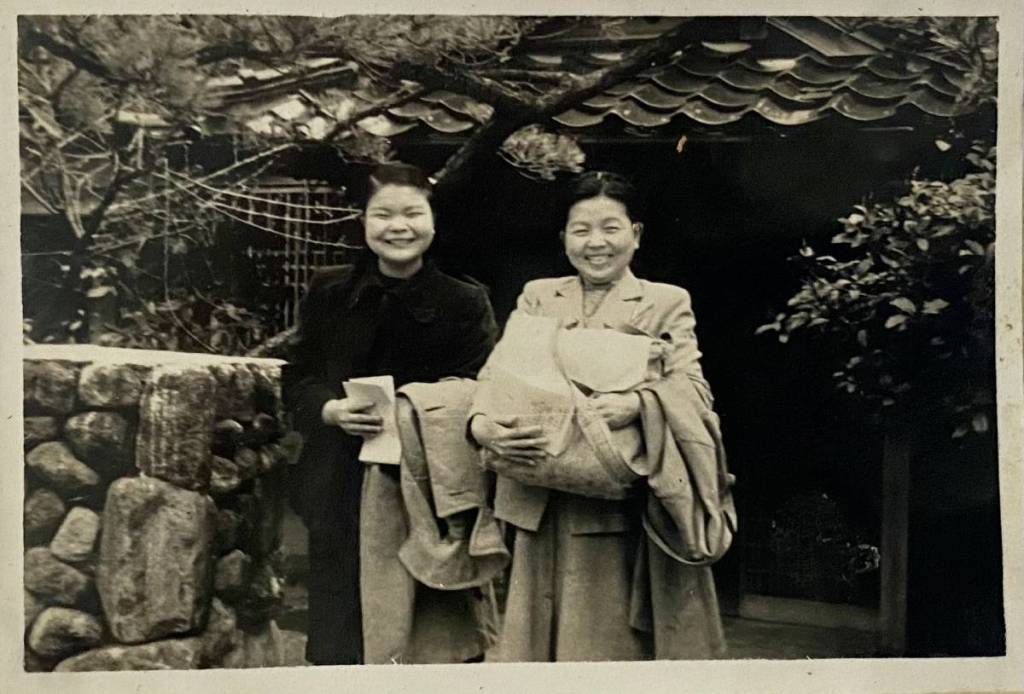
One day we offered some Christian tracts to a group of high school students. One of them carried the tract and invitation back home to the little village in the hills above our place. She passed it on to her elder sisters. Teriko liked it; it seemed to promise the answer to some questions in her heart. Her sister Yoriko and she walked down from the hamlet one Sunday afternoon and circled our house for an hour before they could generate enough courage to step up to our front door. But they came in and fell in love with the hymns straight away. June was able to lead them to the Lord after that, and nearly immediately they wanted to begin a children’s meeting in their own home. They wanted to let others taste the joy in the new songs they had learned.
June:
Teriko said to us, “The children in our village have not heard about Jesus. I am going to invite them to come to my parents’ home; so please help us to teach them about Jesus”. The girls helped us translate and write our simple songs on cotton cloth and off we went to their village. In the Tsukamoto home there was a large Buddhist box but we were allowed to hang the cloth with songs over the Buddhist box so the children could see the writing. Teriko and Yoriko taught the children to sing songs such as “Jesus loves me, this I know ” in Japanese.
Milton:
June spent hours instructing them and dictating messages to pass on when we couldn’t attend. They taught us Japanese and later taught in our Kindergarten. The sisters stayed close to us for many years.
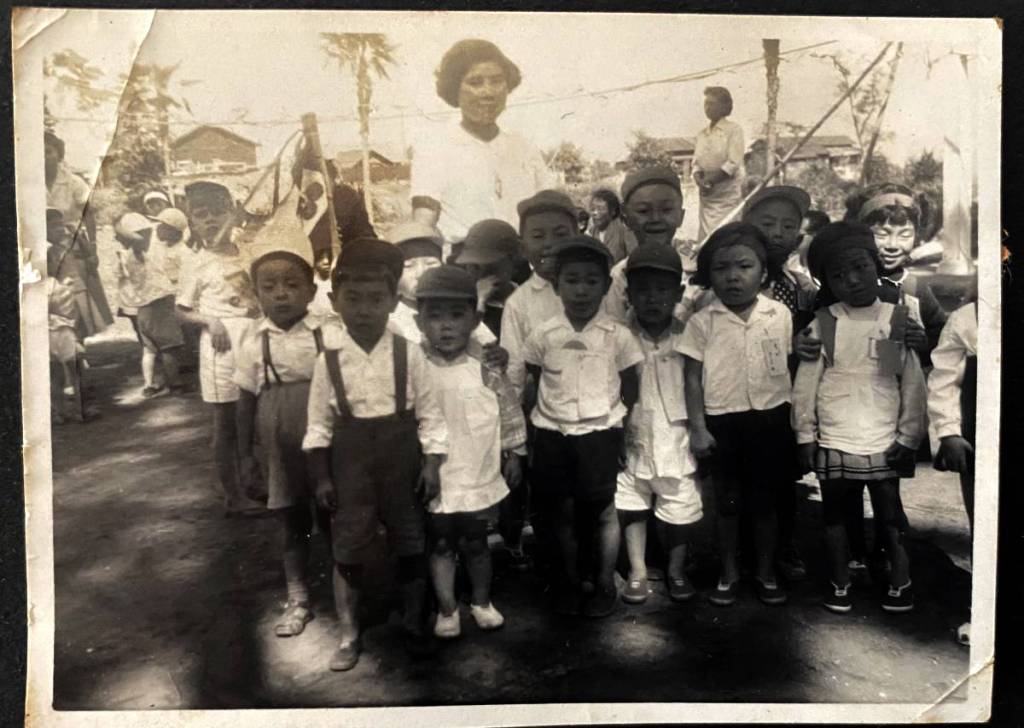
Mary: I can attest, Mom & Dad stayed in touch with Teriko & Yoriko and spoke fondly of them in years to come. They will be mentioned in the next post as well.
 From the Land Down Under to the Rising Sun