
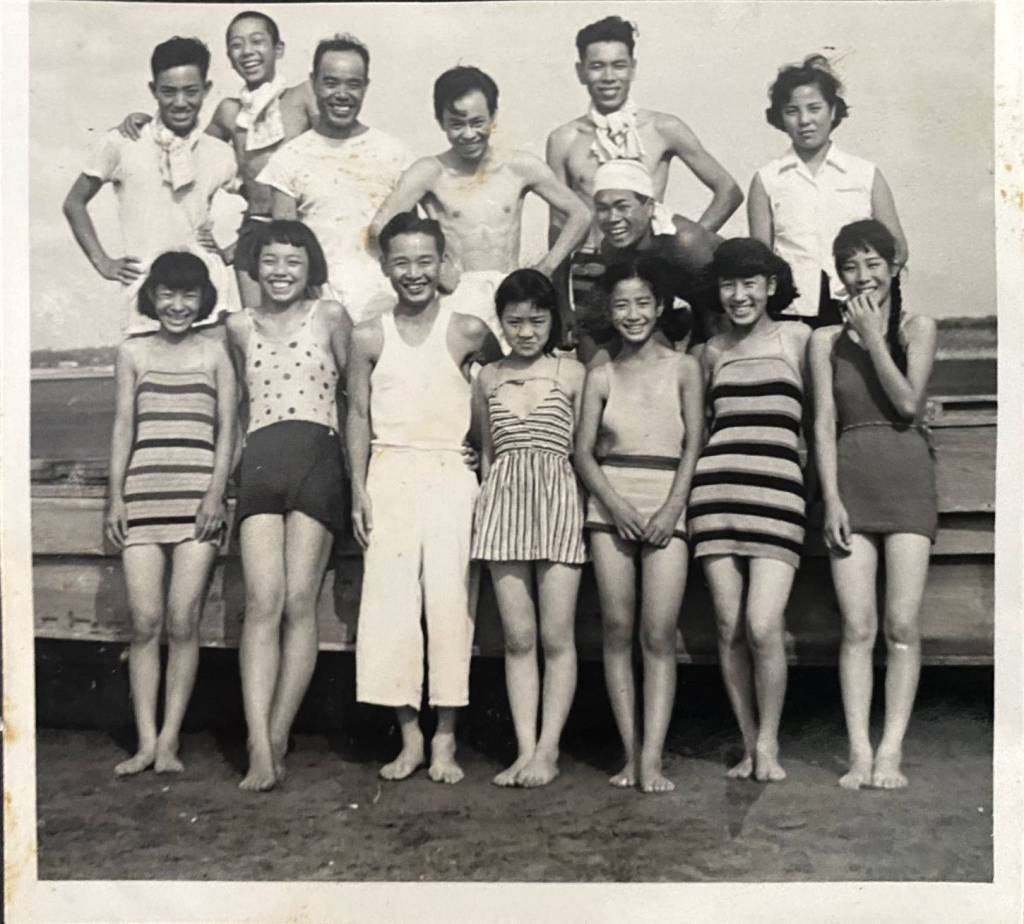
Mary: In this post Milton relates some stories that are so specifically unique to that time and place that it gives an interesting perspective of their life in Beppu. (around 1953) Unfortunately I don’t have specific images that reflect the stories but I am including pictures from a photo album that is from that that time period in June and Milton’s life.
Milton:
Japan was supposed to be in a spiritual vacuum after the war. Lots of people tried to fill that void. Some were well-intentioned, but their methods were questionable. The larger established major denominations required formal education in its missionaries – some to an excess that would have refused someone like Gladys Alward because they hadn’t been to a University. And perhaps those reasons were partly right in that we saw in Beppu an influx of Christians with no training.
Mary: Side note – to be honest I had no idea who Gladys Alward was but looked her up. An impressive story of a plucky, diminutive woman from England who wound up setting up an orphanage in China before World War 2. During the Japanese invasion, she led one hundred orphans to escape. All without a formal mission backing her because she had failed the language test when she first tried.
Milton:
Some of it was good and some of it was embarrassing. The leader of one such group came in like a religious cowboy. He literally lassoed the stone idols on the mountain roads and hurled them into the valley. That nearly started a new Pacific war. What saved him was his Japanese language interpreter. He pacified the locals with words that did not match what the cowboy preacher said. None of the “invaders” had time to learn the language; they had to “save” Japan now. A team of them even stormed into a public bathhouse and preached to the naked captive audience. They preached all the way on a ferry across the Kagoshima bay, and everyone raised their hands before they got off the boat. According to the Mission’s newsletter, they had all been saved. We had to live with all that and more but gradually the light dawned on these overnight missionaries and they faded like the mist when the sun rises.
Under the pressure of hunger and the cold winds that blew through the tattered clothes in post-war Japan, some people moved into caves and under bridges; some young ladies moved into prostitution and some stole from the rich. Some highly moral people, like a professor at a University we heard of, starved to death trying to live without using the black market.

There were a few people who set out to take advantage of the chaotic times. They became experts in their cons and moved into the religious circuit, their turf was the well-fed missionaries from overseas. One man specialized in the Southern Baptists. He moved from one city to another, picking up names and news to drop at the right time. One day my friend, Bill Walker, from the south was visiting a fellow Baptist missionary. As he sat in his friend’s study, he saw a man briskly walking up the front path to the house. He recognized him as a man who had previously fleeced him for some money. But these brazen operators were willing to take the unfortunate risk of being exposed. Some of them were brilliant actors, pulling out the stops of their tear ducts and wet their faces with repentance and praise. And then they would take off with the cash donated.
We advertised our little church simply as a Christian church. It happened to be the same title that the Church of Christ denomination used. One day a young man arrived at our doorstep in “desperate need.” He was, he said a Bible College student from Tokyo and had been helping missionaries in Kyushu. Someone had picked his pocket and took his money. He had walked and hitchhiked from Kagoshima. He hadn’t eaten in a long time, so we invited him in and gave him some food. I asked him why he had not gotten help earlier, after all, there were many Christian churches in towns along the way. He told us he had a conscience about taking help from those that were not “scripturally sound.” He couldn’t go into a church that had a denominational name but when he saw we were a “Christian” church without any other label, he realized we must be correct. As he talked, he made much of his friendship with Mark Maxey in Kagoshima. It just so happened that I had just come back from helping Mark at one of his summer camps. What our visitor said didn’t make sense and the more he talked the more I realized he was making it up. He prattled on excitedly telling more and more of his experiences. When he ran out of words, I told him of my interest in the place he had been and in fact, I also had been there helping, just a few days ago. When he heard that, he knew he had goofed. The smile vanished and with it, all the blessed expressions. He jumped to his feet and opened a window.
“It’s stopped raining”, he exclaimed, “I’ll be on my way.” He moved quickly to the door and slipped on his shoes before we could say anything. As he stepped out into the street, we asked him about his need for money.
“How on earth will you ever get to Tokyo?” June asked innocently. “I’ll sell my blood.” He nobly replied and stepped briskly down the street.
We had another visitor one day who told us a similar story. He was a Bible school student also. He knew his doctrine too. I felt sorry for him but knew he was lying. I even took him to the police station, and they examine his bags. “We can’t prove anything. Why don’t you tell him to get going?” The officer said.
“Just because of the slight possibility that he may be in real need,” I replied.
I took the man to the railway station and bought him his ticket to Tokyo. I waited for his train to come in and then handed the ticket to him. As I did, I took his bag.
“I will keep this for security”, I announced,” when you get to the Bible College have them send me a telegram and I will send the bag.”
His eyes registered shock but he played his part well and walked right onto the train. I watched the train puff its way out of the station and then I headed for home. Within a week, the man was back.
“I have come for my bag”, he said as he handed me the money he borrowed
“You came all the way from Tokyo to redeem a bag?” I queried, “why didn’t you write a letter and save the money?”
“I wanted it quickly.” He stated.
I felt sorry for the guy but had become hardened by the number of confidence men that were taking advantage. So, I took the money and handed him the bag.
Some weeks later at a gathering of missionaries, a lady from a city two train stops from Beppu, told us of a poor man who had visited her. She told us his sad story and described this fine ‘Bible College student.” The truth began to dawn on me: he had gotten off the train two stops from leaving me and probably got a refund on his ticket. Then he searched for another missionary and told his tale. She was kinder than me and had filled his stomach and his pocket. He had returned from there to get his bag back. All through the gathering, I wondered if I should give the lady back the money, he had returned to me. I decided it would be better to leave her happily thinking she had helped a brother in need and let me stay financially in the black!
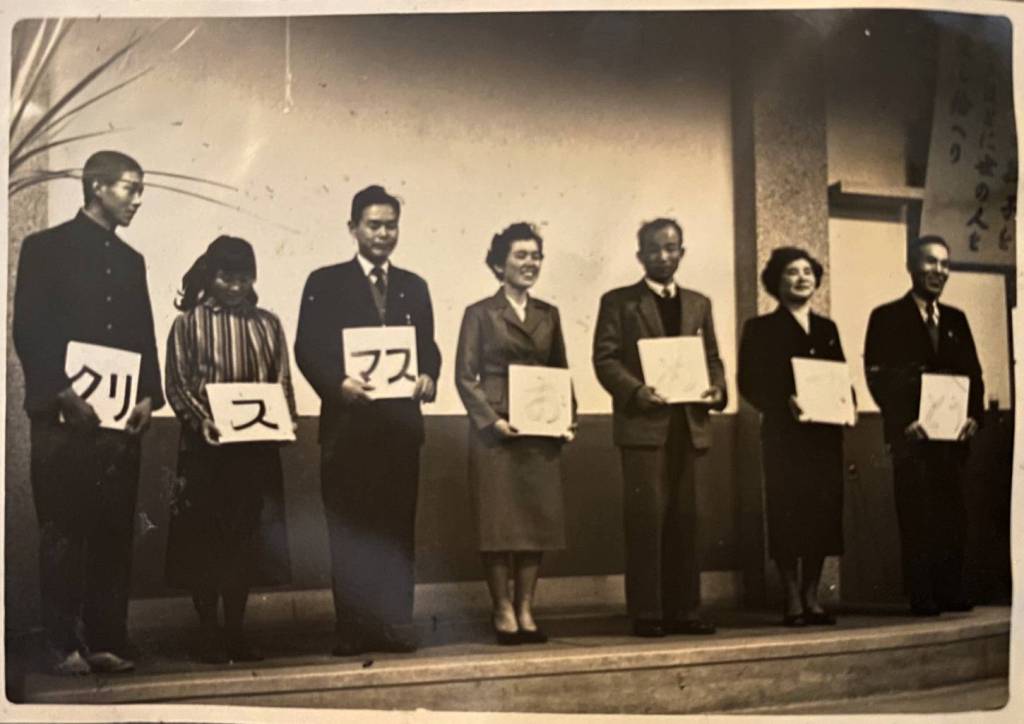
As Japan began to financially recover, the wandering tramps faded away. Most of our life wasn’t problems however, we loved our friends, and we happily cooked our food on clay charcoal burning vessels. We stoked our fire box under the bath with driftwood and we had a toilet with a big tank underneath that the man came and cleaned out occasionally. That arrangement didn’t seem to encourage U.S. Army personal from ever staying long at our home. Years later, when we were used to gas stoves and sewerage again, we understood.

Japanese pastors came in from their country pastorates to speak at our church at times. I called them the heroes. They were a great boost to our faith.
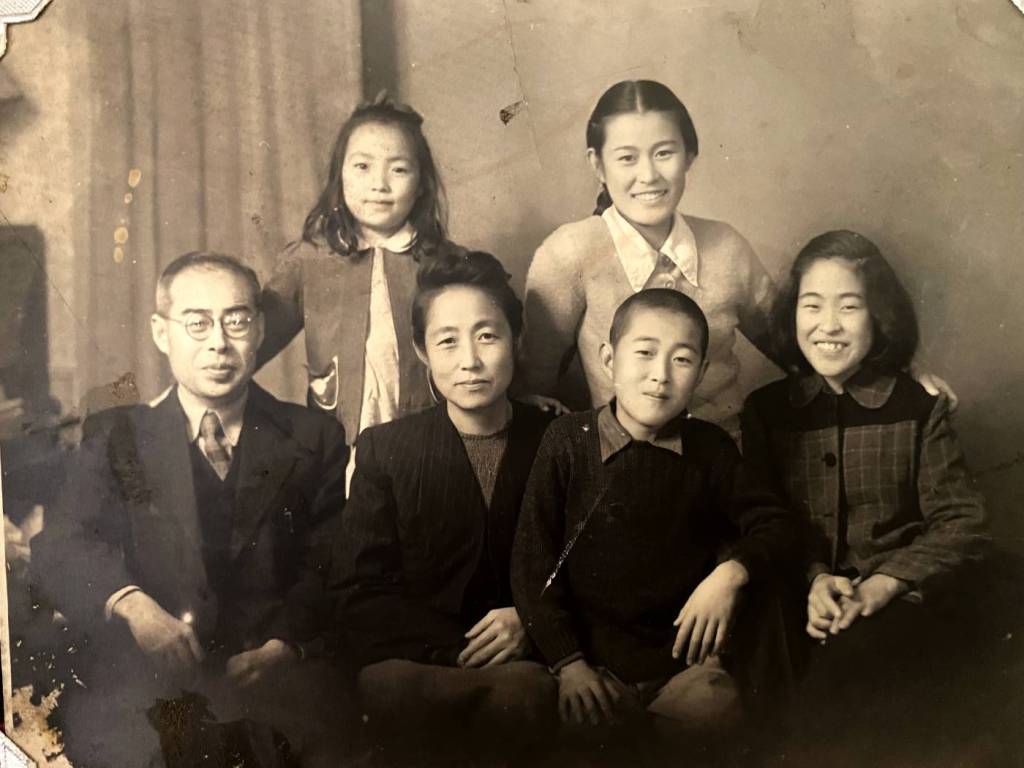
One such pastor was Pastor Akiyama. He invited us to his town and visit with the Christians in the surrounding hamlets with him. We drove a jeep up over an icy mountain pass up to Yufuin, where the nights were colder. Around the low blanket-covered table, with our feet dangling into the warm pit holding a charcoal fire, we listened to stories that warmed our hearts.
The Akiyama’s had come from Osaka, the nation’s top business city at the time. His father-in-law had challenged him to attend to the overwhelming needs of a small village like Yufuin, rather than those of a great modern city. He and his family arrived with nothing. He worked with a group on the roads, building a highway for the military. He tried to chisel a garden out of the frozen ground for their food. People wouldn’t listen to his message and he felt forsaken and alone. Then their little daughter died. He buried her and conducted the funeral service himself. He cried to the Lord: “Lord, You promised that if a kernel of wheat falls into the ground and dies, it will bring forth a harvest. This body is my kernel of wheat. Here she died and is buried, and I want to see the harvest.”
I traveled the hills with Akiyama-sensei and saw the fruit of his labor: prayer meetings at 5 o’clock in the morning in one little hamlet, a group gathering to listen to the work of God in a farmer’s home. He said at first it was only the lame and infirm who came to him. But God healed people there and soon others came because they realized their infirmity was on the inside, not seen in the body.
People like Pastor Akiyama and his wife were our early teachers.
 From the Land Down Under to the Rising Sun
Wonderful photos, Mary. I especially like the last one of the swimmers. Such rich stories, full of meaning. Your dad has a poetic voice. Love his line: “gradually the light dawned on these overnight missionaries and they faded like the mist when the sun rises.” Wow!
LikeLiked by 1 person
Thanks – yes he enjoyed writing it is clear!
LikeLike